Les frais de livraison sont offerts à partir de 65 € d'achat pour la France métropolitaine. Livraison en Point Retrait à La Poste, en relais Pickup ou en consigne sous 48h.
As propolis becomes a common consumer product and research into its therapeutic potential intensifies, it is important to consider the botanical origins of this resin to ensure that you are using a high-quality product.
Once a rather niche product until recently, propolis has experienced an unprecedented boom over the last few years, to the point that it can now be found in almost every pharmacy and in increasingly extensive and sophisticated product ranges: lozenges, oral or nasal sprays, mouthwashes, toothpaste, shampoo, creams, capsules, chewable forms, liquids, oils... Today, propolis comes in all shapes and forms for ever more varied uses.
The paradox of this democratization of propolis is that we are only just beginning to unravel all its mysteries: its molecular complexity, its variability depending on its origin or methods of preparation, not to mention its health benefits, are all subjects of ongoing research. At a time when studies are demonstrating the therapeutic versatility of propolis, French beekeeping is going through a difficult crisis and the standardization of propolis is still in its infancy. It is the perfect time to take stock of the situation.
Propolis, a Broad Field of Therapeutic Action
The production of propolis results from the selective harvesting by bees of resins from various plants and parts (buds, leaves, young twigs, trunks) found in the hive's environment. A goldmine of polyphenols that are otherwise poorly assimilated by humans as they are, the bees then do the legwork for us by chewing and enriching this resin with salivary enzymes, which will become crude propolis. As a sticky and multi-functional material, it is used to protect the hive from insects, to repair it, to insulate it, and to prevent microbial growth on its walls.
The most widely recognized properties of propolis to date are its antimicrobial, antifungal, antiviral, immunomodulatory, anti-inflammatory, and antioxidant virtues. Over the past few years, other virtues of propolis have emerged. Its value in the fight against cancer is now well-documented.
Very recently, animal studies have uncovered other avenues. Some show that it not only protects cells against the side effects of chemotherapy, but also against those of mercury poisoning. Propolis is also believed to help eliminate heavy metals by working hand in hand with a specific liver enzyme. Another, more surprising study demonstrates an anxiolytic and antidepressant activity on the nervous system, likely linked to the antioxidant dimension of the substance. In short, all its properties have not yet come to light. One of the reasons for this is the extraordinary diversity of propolis types and their composition.
The composition of propolis, and therefore its therapeutic benefits, varies significantly depending on the botanical diversity of the plants foraged around the hive and thus the areas of the globe where it is produced. In particular, its polyphenol composition determines its molecular profile, acting as a signature of an entire local ecosystem. Today, researchers are studying and comparing the compositions of propolis from Portugal, Italy, China, Cuba, Uruguay, and Cameroon. However, a country of origin alone is not enough to characterize a propolis. This classification work, which began years ago in aromatherapy with the concept of chemotypes, is just starting for propolis. Specialists have identified three main families of propolis based on their composition: brown, green, and red.
Three Main Origins of Propolis
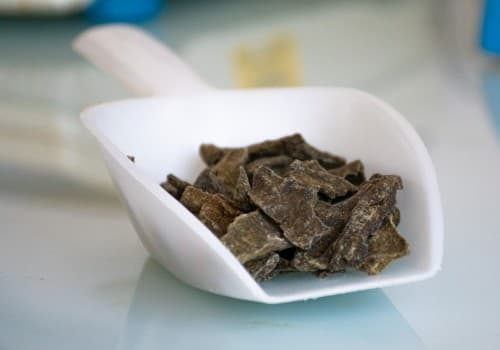
Propolis does not derive its uniqueness from its color, but from its botanical origin!
Brown Poplar Propolis
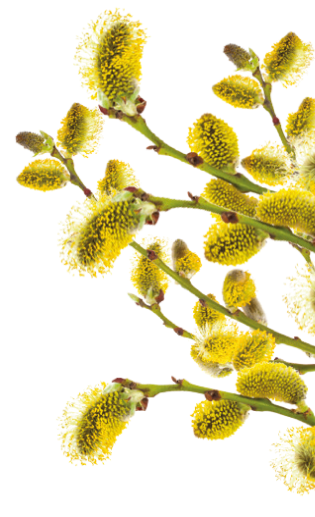
Brown propolis is a type of propolis that comes largely from poplar buds (specifically Populus nigra), but also from other trees such as willow and alder.
It is the most common type in France and in temperate zones in general (North America, continental Europe). With more than 300 identified active molecules, this propolis possesses a very broad and balanced spectrum of various polyphenols (pinocembrin, galangin, quercetin, chrysin), which gives it great versatility.
Baccharis Green Propolis
Green propolis is produced by so-called "Africanized" bees from a plant that is highly prevalent in Brazil: field rosemary.
While it shares the antibacterial, antiviral, antioxidant, and anti-inflammatory properties of its brown cousin, its chemical profile reveals a high concentration of artepillin C. This substance is particularly anti-tumoral, making it highly sought after in Japan, where extensive research on the subject has been conducted.
Red Propolis from Dalbergia ecastaphyllum
The red propolis harvested in Brazil comes from the resin produced by the trunk of the Dalbergia ecastaphyllum in response to beetle attacks.
Its chemical composition only began to be understood in 2004, and its biological origin in 2012. Its global production remains confidential, which explains its higher price. The chemical profile of red propolis is particularly distinguished by its significant antifungal activity, which is very interesting for helping to fight against resistant germs such as Candida albicans.
Colors of Propolis
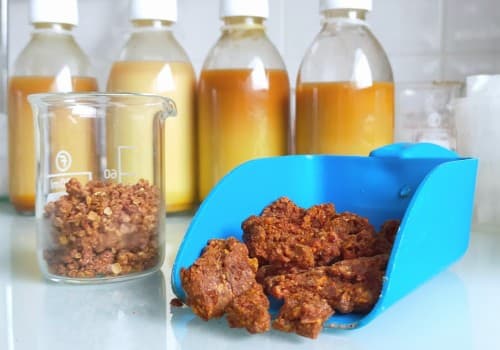
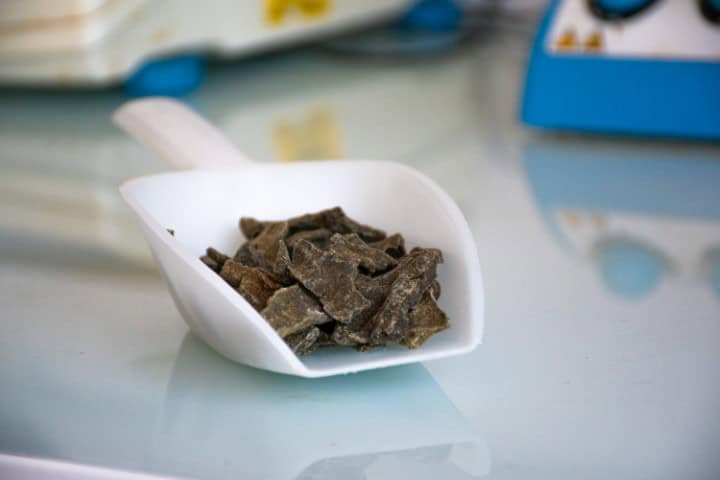
Brown, black, green, red, yellow, and even white! Propolis does not get its originality from its color but from its botanical origin, which makes it specific and unique. Each botanical species produces organic compounds - polyphenols - involved in its defense mechanism. Polyphenols exhibit differences in chemical structure that lead to variations in assimilation and, above all, very different modes of action on the same therapeutic target. Without a clear mention of the botanical origin and the polyphenol content, the quality and effectiveness of the propolis cannot be guaranteed.
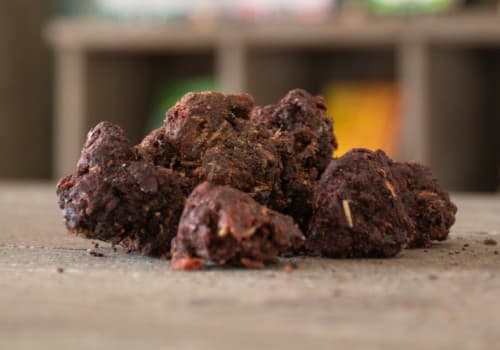
The harvesting method is decisive for the quality of the propolis. Raw propolis, known as "scraping" propolis, is what is scraped from the edges of the frames. It is composed of resin and balms (50 to 55%), wax (30 to 40%), essential or volatile oils, and mineral and organic matter as diverse as sand, plant fibers, or even pieces of dead insects. It therefore requires purification and extraction, most often using alcohol, and then potentially processing into powder form. This technique does not allow for the production of high-quality propolis.
As for propolis in oily form, it involves using propylene glycol to extract active ingredients that are poorly lipid-soluble. Some producers harvest propolis using grids to be better able to specify the botanical origin of the propolis.
A More or Less Controlled Quality
In France today, propolis falls under the status of a food supplement, and therapeutic studies on humans are still limited. This results in the impossibility of promoting health claims, even for things as simple as sore throats, unless they are combined with other elements whose virtues are recognized by the European Union. This is why we see the emergence of products where propolis is paired with other plants, vitamins, or minerals. Furthermore, the legislative vagueness means there is no obligation to specify the type of propolis in question, its origin, or its concentration of active ingredients. Each laboratory or brand has its own method and does as it sees fit.
In this vagueness, which is uncomfortable for the consumer, we have decided to stand out by guaranteeing:
Propolis extraction techniques, using mesh screens (poplar) and strips (baccharis and dalbergia).
Transparency regarding the source of the propolis and a guarantee of botanical origins.
 Français
 English

.JPG)