Les frais de livraison sont offerts à partir de 65 € d'achat pour la France métropolitaine. Livraison en Point Retrait à La Poste, en relais Pickup ou en consigne sous 48h.
All studies agree: 15% of the French population over the age of 18 is obese, and about 35% is overweight. Childhood obesity is no exception, as 15% of children under 15 are also obese. The consequences of this excess weight on our health should not be taken lightly. With nearly 3 million people affected, it is the fifth leading risk factor for mortality!
The Mechanisms of Being Overweight
Being overweight has a multifactorial origin. Among the contributing factors are hormonal, dietary, environmental, genetic, psychological, and, finally, sociological factors. This phenomenon, which is now very significant in the United States, is also starting to become a major public health issue in Europe. Populations are consequently moving toward two completely opposite types of behavior.
The first group takes care of themselves by paying attention to what they eat as well as their lifestyle. This is why, year after year, the parks in our large cities and sports facilities are seeing an increase in enthusiasts of all kinds of sports that help maintain fitness. The second group, on the other hand, does not pay enough attention to the way they nourish themselves. As soon as the extra pounds become a handicap, they stop doing any exercise.
Being overweight = too many calories = not enough micronutrients
From March to June, the front pages of newspapers and magazines advocate recipes for losing extra pounds. Some of these diets are unbalanced and should therefore be avoided, as any imbalance leads to failure. Any weight loss is accompanied by four physiological processes that are best understood in order to succeed.
1. The body’s fat cells have a kind of memory
Unfortunately, if a low-calorie diet has caused them to lose fat, fat cells will attempt to replenish their stores through hormonal mechanisms. The faster the weight loss, the more intense this mechanism for rebuilding reserves will be. The more a diet is labeled "effective," the harder it will be to stick to over time!
2. Fewer Calories Often Means Fewer Micronutrients
The overaccumulation of fat reserves is often due to micronutrient deficiencies. The higher an food is in calories and the lower it is in micronutrients, the more weight it will cause you to gain. A body lacking micronutrients will try to compensate with quantity for what a lack of quality cannot provide. Substituting micronutrient-poor foods such as white bread, pasta, or rice with bananas (even though they are high in calories) will lead to weight loss. If you want to lose weight, simply eating less is not enough. You must also rebalance your diet so as not to worsen deficiencies.
3. The Imbalance in the Omega-3 to Omega-6 Fatty Acid Ratio
Omega-3s are anti-inflammatory. However, the chronic inflammation caused by these imbalances promotes fat accumulation and severe diseases such as various cancers and type 2 diabetes. Inflamed fat cells no longer respond to regulatory substances (such as insulin and leptins). In a way, they become independent in their accumulation. Any weight-loss diet must start with or be preceded by a good intake of omega-3s: walnut or rapeseed oils, cod liver oil, or fatty fish... But not sunflower oil, which is rich in pro-inflammatory omega-6s!
4. Every fat loss is an intoxication proportional to the loss
The lost fat will enter the bloodstream and be converted into calories used by the body. All the toxins within these fats will end up in circulation. These are Maillard molecules resulting from the cooking of the fats and proteins you have consumed. Inside these toxins are also all the fat-soluble pesticides that the body does not know how to reject, and which the body's fats remove from the bloodstream by storing them (a detox program using propolis would be wise). Weight loss is then accompanied by significant oxidative stress, which only amplifies the overall stress of a changing physiological state. Losing weight too quickly will induce stress on multiple levels – cellular, physiological, and psychological – which jeopardize the continuation of the diet.
A Few Nutritional Tips
Being overweight is associated with various disorders that contribute to reducing life expectancy, such as type II diabetes, high blood pressure, cardiovascular diseases, sleep apnea, or osteoarthritis. Within this context, it is possible to gently influence two levels of action to take control of your figure: diet and physical exercise. Above all, this is a personal investment. Of course, you should not hesitate to seek support from dietitians, nutritionists, and sports coaches.
In most cases, these excess curves are the manifestation of an imbalance between energy intake and expenditure. It is therefore necessary to act on both levels. A dietary assessment can help you take stock of what you consume and how you consume it. Wanting to pay attention to your diet does not mean having to deprive yourself of everything, all the time!
A balanced diet isn’t built in a single day. Be wary! Diets that completely eliminate certain food groups, or that promise dramatic weight loss in record time, often lead to nutritional deficiencies and frustration. This can trigger a rebound effect or, worse, pose a risk of serious functional damage to certain organs.
Therefore, preference should be given to foods with a low or moderate glycemic index (starches, legumes, fruits, vegetables...) but also to fresh pollen, a source of non-fatty proteins. It is now well established that the microbiota—the totality of bacteria contained in our gut—plays an essential role in controlling food intake. Consuming food rich in lactic ferments, such as fresh hawthorn pollen, combined with a source of prebiotics, such as the fructo-oligosaccharides found in liquid honey, are winning combinations. Eating fiber-rich foods will be recommended and will have a beneficial effect on your transit, your immunity, and mineral absorption, as well as providing a satiating effect.
Still or sparkling water, on its own or mixed with fruit powders, vegetable juices, herbal teas, coffee, tea... Provided it does not supply empty calories like sodas or alcohol, regular hydration throughout the day will trick your brain slightly and ward off snacking urges. Within the framework of this caloric rebalancing, a decrease in daily energy intake is often necessary. However, it is preferable to distribute this daily intake primarily to breakfast and lunch in order to have more opportunities to burn these calories rather than store them.
One of the best ways to burn these calories is sport. Low-impact activities such as walking, swimming, or cycling are to be favored. The goal is to generate energy from the body's fats through the aerobic pathway. This can be punctuated by a small snack such as an apple or a smoothie made from plant-based milk and antioxidant-rich fruit powders. This period of transition in our dietary and lifestyle habits can be a source of temporary weakening of the immune system. Consuming propolis during this period can provide good support for our immunity.
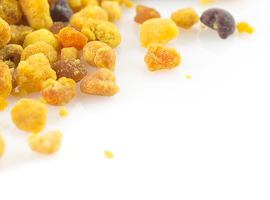
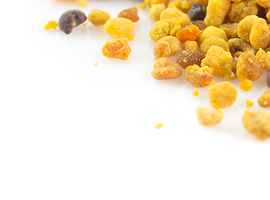
Pollen harvested by bees remains the richest food in micronutrients known to date. Due to its high content of vitamins, enzymes, and minerals, pollen is the best way to compensate for deficiencies in the prior diet that caused the excess weight. Fresh frozen pollen is preferred, as simple drying causes a matrix collapse and the loss of synergy between the elements.
Being overweight increases the risk of cardiovascular disease, cancer, as well as degeneration of the nervous system and the retina. While the combination of antioxidants in fresh pollen can only have a preventive role, reducing the risk even slightly helps to better manage the stress generated by this overload. Consider carotenoids, vitamin E, and phytosterols, which allow for better cholesterol management and the elimination of atheromatous plaques. For overweight individuals, the concept of a temporary cure does not really apply. It is highly recommended to consume larger doses of fresh pollen: around 30 g/day.
By reducing the pressure of pathogens in the gut, cistus pollen allows for better intestinal functioning. Well-nourished with fiber, the lactic flora of the right colon regains its vigor and fully fulfills its role in eliminating bad cholesterol. Fresh pollen is the master of regulating intestinal transit. However, constipation is the great enemy of overweight individuals. They experience an excessive reabsorption of water by the transverse and descending colon. Their ascending (right) colon does not secrete enough mucins to protect the mucosa. Fresh pollen therefore restructures the entire process of elimination through stools, in combination with the fibers from fruits and vegetables.
Fresh Pollen: The Microbiota Policeman
Among Americans, 98% of obese individuals suffer from intestinal candidiasis. Candida albicans is a germ that everyone harbors in their intestines. It can take the form of a harmless yeast or the form of a fungus. In the latter case, it develops a mycelium that penetrates the intestinal mucosa and can colonize the digestive tract from the mouth to the anus. At both ends of the digestive tract, it causes a depigmentation called thrush. This fungus releases around thirty toxins that cause a drop in immunity, fatigue, anxiety, anal itching, and a perpetual craving for sugar. To grow, it actually needs a diet rich in fast-acting sugars. Obese individuals are therefore caught in a vicious circle: they consume sugar because the candidiasis generates this need, and the infection persists because they consume sugar.
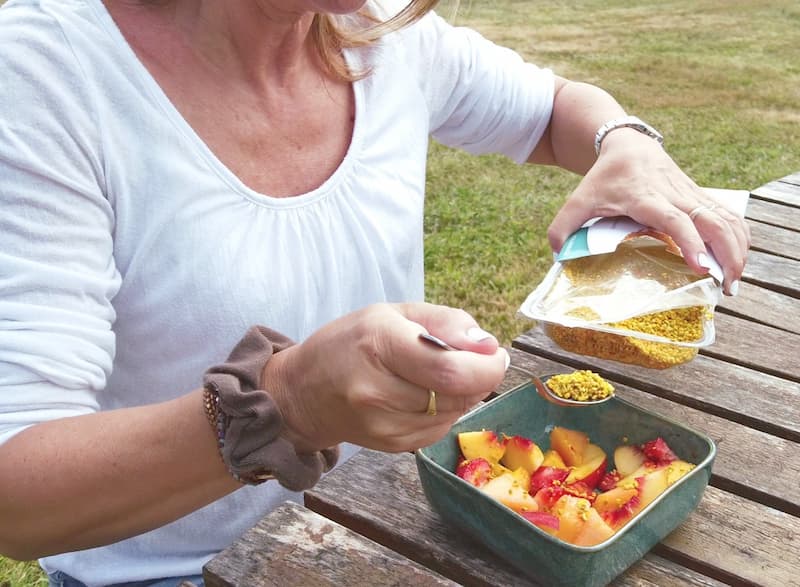
Fresh pollen can be a valuable ally in fighting this fungus. To start, take one tablespoon of fresh cistus pollen with each meal. Expect a temporary worsening of symptoms during the first ten days. This is a positive sign: Candida releases its toxins as it retreats. It is crucial to persevere during these first two weeks, as the rest of the treatment will be easier. Gradually, you will regain your energy, the itching will disappear, and your weight will decrease. It is important not to stop taking the pollen too soon. Stopping prematurely could lead to the return of the fungus.
Pollen, an Antidote to Diet-Induced Anxiety
The idea of restricting one's diet is often a source of great anxiety, or even panic. For many, eating less is perceived as a form of deprivation, a slow decline. Introducing fresh pollen into your diet transforms this perception. It acts as a true antidote to the feeling of lack, replacing quantity with exceptional nutritional quality. Furthermore, this approach establishes a positive self-care ritual, transforming dietary constraint into a benevolent act for one's own well-being.
The stress experienced during food deprivation is not solely psychological; it also generates physiological stress. The liver stores energy reserves in the form of glycogen, which can be converted into glucose according to our body's needs for several days, or even weeks. Beyond its psychological benefits, pollen provides a gentle, highly appreciable euphoria. Its B-group vitamins act directly on the nervous system, thereby helping to counteract the stress linked to the sensation of deprivation.
Why Consume Pollen at Breakfast?
Pollens are naturally rich in plant proteins: 20% on average and up to 24% for hawthorn bee pollen. They will therefore contribute to your daily intake right from the 1st meal of the day. Researchers recently analyzed population health data to understand the relationship between protein intake and obesity. They discovered a link between a lower protein intake during the first meal of the day and a higher overall food intake throughout the day. The results of the study are published in Obesity.
According to a new study, "protein hunger" can drive the overconsumption of highly processed foods and lead to obesity. First proposed in 2005, the protein leverage hypothesis (PLH) is a theory regarding the cause of obesity. It states that if the body's protein requirements are not met, the consumption of fats and carbohydrates increases, which dampens satiety signals and increases food intake. Researchers found that people who consumed lower amounts of protein during the first meal of the day had a higher caloric intake in subsequent meals. The researchers noted that as protein intake decreased, energy from fats, carbohydrates, sugars, and alcohol increased in what is known as "protein dilution."Excerpt from the Presse Santé article A protein-rich breakfast to prevent overeating and obesity
They also noted that individuals who consumed less protein at their first meal consumed more highly processed foods throughout the day. This study suggests that in humans, consuming low-protein meals early in the day leads, through protein leverage, to an overconsumption of energy (fats and carbohydrates).
Even though people who have low-protein breakfasts tend to choose meals richer in protein later on (at lunch and dinner), they do not entirely make up for their low-protein start to the day. Consequently, by the end of the day, their overall daily diet is lower in protein and higher in fats and/or carbohydrates compared to people who start their day with higher-protein meals.
It is important to note that fresh-frozen pollen contains all nine essential amino acids. It has a balanced amino acid profile that promotes better protein synthesis and more efficient absorption of the protein consumed throughout the rest of the day.
 Français
 English

.jpg)