Green Propolis: A Specific Geographical Origin
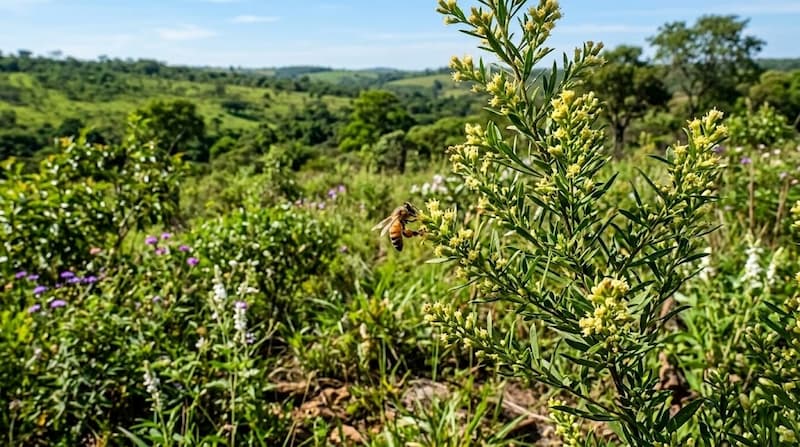
In this region of Minas Gerais, propolis benefits from an exceptional natural environment that gives it all the necessary qualities for the production of organic green propolis. Indeed, in these vast natural expanses, no intensive agriculture is practiced, making these regions clean and free of all pesticides.
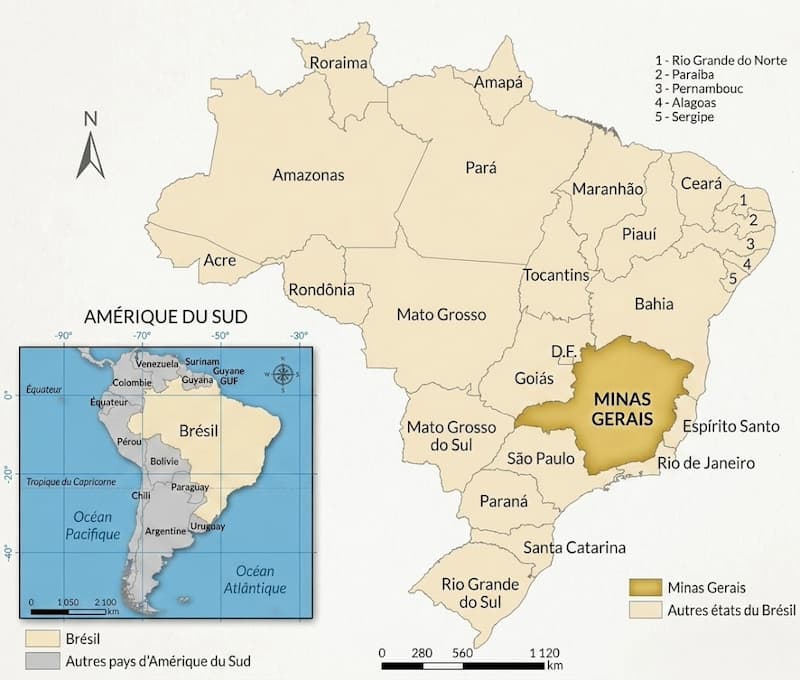
Brazil is the world's leading producer of propolis, and the region where our propolis comes from accounts for 70% of national production. 70% of this production is destined for the Asian market, with Japan being the top importer. Propolis is undoubtedly the most profitable product for beekeepers in this state.
Minas Gerais is the 5th largest honey-producing state in Brazil, with Brazil being the 11th largest producer worldwide. Honey production: 4,500,000 tons of honey / year; beekeeping represents 13,000 jobs, consisting mainly of small family farms. It is estimated that there are around 4,500 beekeepers, mostly organized into 85 associations and 4 cooperatives. Beekeeping is most prominent in the south-central, central, and north-central parts of the state, which are very rugged regions with relatively dry and unrewarding soil. The biotope is known as the "Cerrado"; it is not the Brazilian tropical rainforest, nor is it the Mata Atlântica (which is the strip of tropical forest along the Brazilian Atlantic coast). For the most part, the economy relies on the mining industry; agriculture is family-based, relying mainly on food production, extensive livestock farming (meat and milk), and eucalyptus farming (cellulose and, accessorily, essential oil).
Botanical Origin: Baccharis Dracunculifolia
Baccharis Dracunculifolia, also known as Field Rosemary, is a wild shrub that is extremely abundant in this region of Brazil. The green color of its propolis is characteristic. The bees harvest the resin secreted by the emerging leaves of the Baccharis before passing it on to the worker bees in the hive. The workers chew it, mixing the resin with wax and enzymes secreted by their glandular system to obtain a type of mastic to make it more malleable. This chewing action cleaves the carbohydrate fraction of the polyphenols and releases the aglycone part, which contains the polyphenols.
It should be noted that the bees in this region of Brazil belong to lineages resulting from the crossbreeding of African bees, a species that is more resistant to diseases and parasites such as varroa. European bees are more vulnerable, forcing beekeepers to use phytosanitary products to keep their apiaries and colonies healthy.
Harvesting Method of Green Propolis
Green propolis from Baccharis is harvested in a completely different way compared to European propolis, which is obtained by scraping or using grids. The goal is to simulate an entry point into the hive that the bees will rush to plug. Bees use propolis to seal all holes or other cracks that could let predators in. Therefore, by simulating this hole, the entire plate will be covered with propolis, and all that is left to do is harvest it. The trick consists of placing a small transparent film, which lets light through and thus simulates a possible passage for intruders.
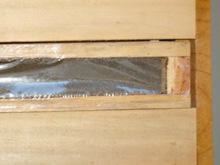
A transparent plastic film is placed over the frame, simulating an entrance to the hive.
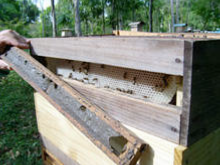
The frame is then filled with propolis by the bees. This is then harvested in strips.
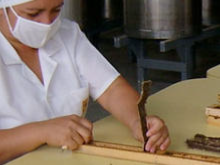
The strips are frozen and then transported via refrigerated transport to Pollenergie.
Characteristics of Baccharis Green Propolis
It is the only propolis to contain a high artepillin C content (6 to 8% compared to 2 to 3 times less for brown poplar propolis). This powerful antioxidant from the phenol family is a major characteristic of this propolis, as the majority of scientific publications on propolis have been conducted on green propolis.
The work of Bhargava (https://pubmed.ncbi.nlm.nih.gov/29393408) highlighted the antitumor potential of artepillin C. This compound slows down the proliferation of cancer cells (notably in the stomach, colon, and lungs) by exerting a direct cytotoxic action and triggering apoptosis (programmed cell death). Furthermore, studies on animal models reveal significant anti-inflammatory activity: artepillin C reduces edema formation by limiting neutrophil recruitment and inhibiting key mediators of inflammation, such as prostaglandins and the NF-κB transcription factor.
Green Propolis in Accompaniment of Antibiotics
Biofilms are communities of microorganisms (bacteria, microfungi, microalgae, or protozoa) that adhere to each other and to a surface. The biofilm protects the bacteria and allows them to survive in hostile environmental conditions.
Although beneficial in most environments, bacterial biofilms that develop on implants or during chronic infections act as reservoirs for pathogens, causing numerous nosocomial infections. Despite the implementation of preventive measures, biofilms are difficult to eradicate due to their characteristic tolerance to high doses of antibiotics.
Despite the implementation of preventive measures, biofilms are difficult to eradicate due to their characteristic tolerance to high doses of antibiotics. However, green propolis is said to exhibit anti-biofilm activity by qualitatively disrupting biofilm formation and causing a loss of its structural architecture. Bacteria that revert to a planktonic state are significantly less resistant to the action of antibiotics and to the action of the propolis itself. The protective role of the biofilm is then greatly reduced, suggesting a significant synergistic effect between green propolis and antibiotic treatments. It is worth noting that the specific compounds in green propolis responsible for this anti-biofilm activity have not yet been identified.
 Français
 English