Les frais de livraison sont offerts à partir de 65 € d'achat pour la France métropolitaine. Livraison en Point Retrait à La Poste, en relais Pickup ou en consigne sous 48h.
The natural balance of the gut flora is essential to the proper functioning of the digestive system and directly influences our immune system and vitality. With bee products, particularly fresh-frozen pollen, you can restore your gut health, which will have a positive impact on your overall well-being.
Probiotic Action of Fresh Pollen
Entomophilous pollen is born from the encounter between bees and flowers. It contains a great number of nutrients that are beneficial to the body. Among these elements, we find a large portion of vitamins C, B, and E, antioxidants (carotenoids and polyphenols), fibers, enzymes, and lactic ferments specific to the bee.
Where do these lactic ferments come from?
The ferments are cultured by the bees on the nectar inside the hive. Before leaving to forage, they fill their honey stomach with nectar and regurgitate it to moisten the pollen pellets. The ferments contained in the nectar therefore inoculate the pellets. This practice, worthy of the food industry, has actually been mastered by bees for several million years. Cistus bee pollen features a large quantity of lactic ferments belonging to the lactobacilli family with a "probiotic effect", which are allies of a balanced intestinal flora.
By consuming fresh pollen, we introduce "good bacteria" to our microbiota. This helps prevent the risks of dysbiosis, which is responsible for intestinal conditions, severe fatigue, and an increased risk of infections. Numerous studies have also shown that improving the intestinal flora strengthens immunity, a large part of which (70%) is located around our intestines. Cistus pollen will boost our natural defenses, especially during seasonal changes. It also contributes to consolidating the intestinal mucosa to fight against intestinal permeability.
When the tight junctions of the intestinal epithelial cells pull apart, they allow large, unwanted molecules to pass into the body, risking numerous disorders: immune deregulation, osteoarticular problems, inflammation, and allergies. By providing vitamin E and carotenoids, cistus pollen helps consolidate these junctions, promoting a competent selective barrier and allowing us to better benefit from the valuable micronutrients in our diet.
How should you take fresh pollen? In regular courses (3 to 4 times a year) or daily in case of chronic problems. It should be taken at a dose of one tablespoon, during breakfast or a light meal. For optimal assimilation, it is recommended to pair fresh pollen with seasonal fruits and vegetables. Above all, do not heat the pollen, as this would harm its population of lactic ferments and enzymes, which are so important for our intestinal health!
When it comes to treating constipation, don’t forget about honey! Its mild laxative properties help restore healthy bowel movements. Thanks to its high sugar content, it draws water into the intestines. Opt for acacia honey, which is best known for this benefit: take two teaspoons of honey in one cup of cold water daily.
The pollen harvested by bees is a raw, highly complete, and complex food. If it is dried, many of its heat-sensitive micronutrients, such as its precious lactic ferments, will be destroyed. Freezing and packaging under a controlled atmosphere preserve the full integrity of its nutritional and organoleptic qualities.
The outer shells of entomophilous pollen grains are rich in fiber, which gives them incredible robustness, allowing them to resist crushing and tearing during transport on the bodies of pollinating insects. The male gametes contained within the grains are thus well protected. This shell is even referred to as a plant diamond because it is so resilient!
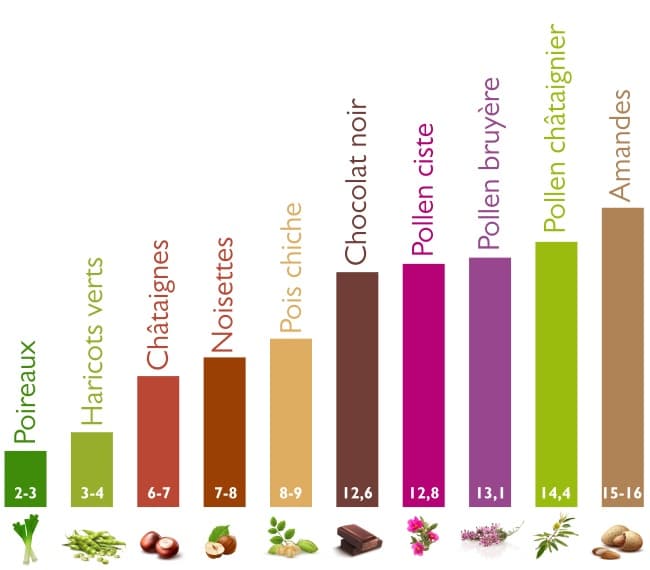
These fibers are valuable allies for our intestinal health and general well-being. On average, pollens contain 12 to 13 grams of fiber per 100 g. This propels them to the top tier of fiber-rich foods alongside prunes and almonds, ahead of artichokes, salsify, and lentils!
Soluble fiber
Soluble fiber forms a gel when mixed with water and can help lower blood cholesterol. In addition, it acts as a filter in the intestine to slow the absorption of carbohydrates. It is necessary to consume a very large amount of fiber every day to improve blood sugar control.
The recommended daily intake of fiber is 25 to 30 g. Few people seem to reach these levels in their diet. Dietary fiber has health benefits regarding cardiovascular diseases, weight, satiety, transit, intestinal microbiota, as well as nutrient bioavailability and absorption.
The friendly bacteria of the microbiota also use these insoluble fibers as a nutrient substrate. Through their fermentation, they produce short-chain fatty acids (SCFAs), which include butyrate, propionate, and acetate. These beneficial substances promote a better ecology of the intestinal flora. Thanks to its role in intestinal permeability and its anti-inflammatory properties, butyrate is particularly interesting in preventing certain digestive pathologies such as Inflammatory Bowel Diseases (IBD), diverticulitis, or Irritable Bowel Syndrome (IBS). Finally, butyrate controls the balance between the proliferation, differentiation, and apoptosis of colonocytes, which may explain its preventive role against tumors.
These prebiotic fibers are poorly, if at all, assimilated by bad bacteria, meaning they cannot use them. Meanwhile, the good bacteria continue to grow and thrive, colonizing an increasingly vast territory.
As you will have understood, fiber is essential to the intestinal microbiota, which feeds on it. When bacteria in the digestive system do not get an adequate amount of fiber from the diet, they can begin to "nibble" on the mucus layer that lines the intestine, up to a critical point where harmful bacteria can infect the colon wall!
A study published in 2019 in The Lancet confirms that individuals who consume the most fiber have a reduced risk of suffering from non-communicable diseases: diabetes, cancer, cardiovascular diseases, and more. The researchers concluded that eating 25 to 29 g of fiber per day provides real health benefits.
The results also show a 15% to 30% reduction in all-cause mortality among people who consume more fiber compared to those who consume the least. Furthermore, a high-fiber diet reduces the incidence of coronary heart disease, stroke, type 2 diabetes, and colorectal cancer by 16 to 24%.
 Français
 English