Free Radicals, What Are They?
It is a chemical species (atom or molecule) that possesses an unpaired electron, making it unstable and causing high reactivity toward surrounding molecules. It stabilizes itself at the expense of a neighboring molecule, which in turn becomes a free radical, and so on. The phenomenon propagates through chain reactions.
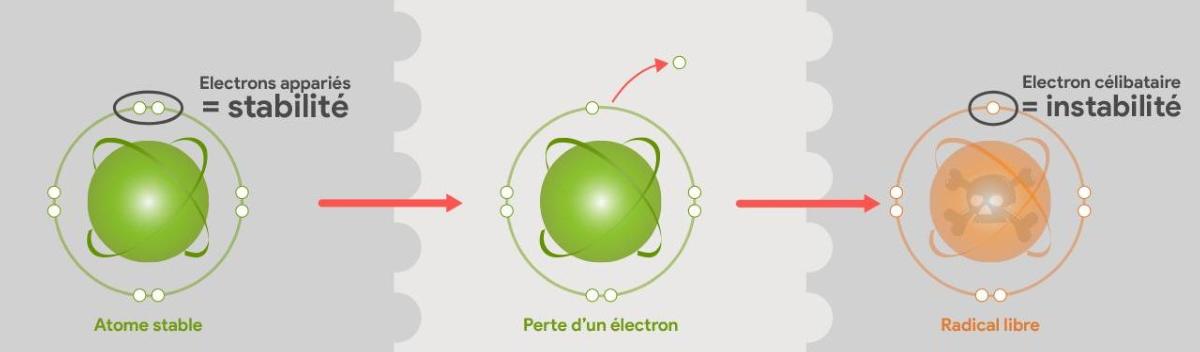
Free radicals are naturally present in our body and act based on two factors:
- Internal factor: free radicals are formed every time our cells use oxygen. Certain situations considerably increase their production: inflammation, chronic stress…
- External factor: exposure to ultraviolet rays, exposure to pollutants, active and passive smoking…
Free radicals attack all biological materials (DNA, proteins, lipids…) and damage our cell membranes and cells. They are responsible for our aging. Oxidative damage accumulates with age and largely explains why the cells, tissues, and organs of older people are more damaged than those of children. To date, more than 200 diseases are believed to be linked directly or indirectly to oxidative stress: cardiovascular diseases, neurodegenerative diseases, cancers…
Free radicals are also essential for the proper functioning of the body. For example, they are involved in energy production processes. White blood cells use them to eliminate viruses and bacteria. They are also used to destroy old or defective cells, which are then replaced by new ones. The key is to maintain balance. The body produces free radicals, but it also protects itself from them with the greatest care thanks to molecules called antioxidants.
Where Do Antioxidants Come From?
Primary antioxidants are produced by our body. These can be, for example, molecules like glutathione (a powerful cellular detoxifier) or enzymes that need to be in the presence of minerals from food to be activated. Secondary antioxidants are supplied by our diet:
- Certain vitamins: C, E, as well as B2 (riboflavin)
- Trace elements: zinc, copper, selenium, and iron, which are necessary to activate protective enzymes
- Compounds from fruits and vegetables: carotenoids, polyphenols(tannins, flavonoids, anthocyanins, phenolic acids)
- Compounds from spices and herbs: terpenes.
The ORAC Test
The ORAC index is certainly the most widely used indicator. It measures the antioxidant capacity of a food item. It is calculated using a test of the same name. It is expressed in µmol TE/100g of food, which stands for micromole of Trolox equivalent (the reference antioxidant) per 100g of food. The higher the number, the greater the antioxidant property of the food.
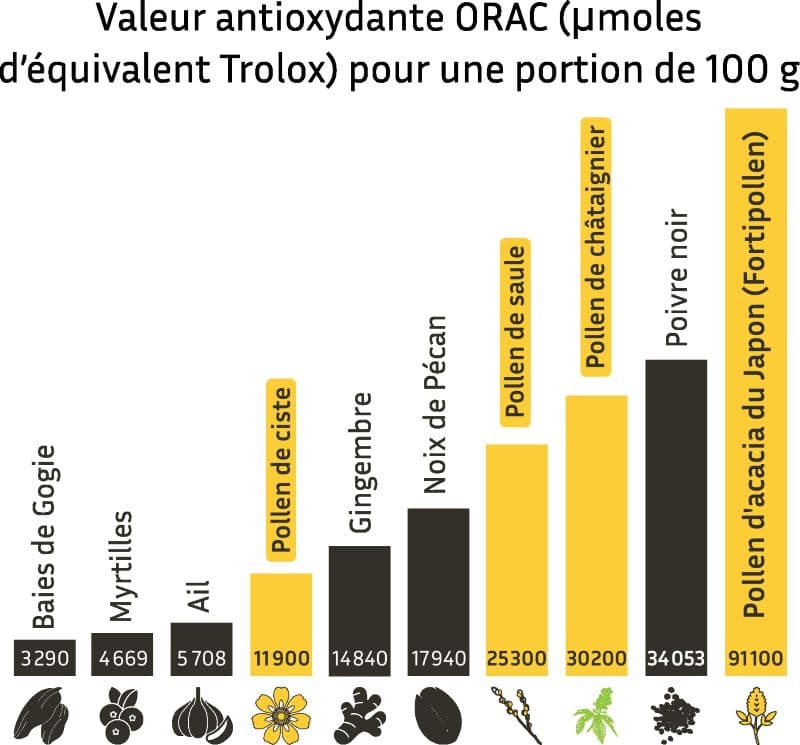
American nutritionists recommend a daily intake of between 3,000 and 5,000 ORAC units (µmolTE/100g) spread throughout the day in order to keep oxidative stress in the body under control.
Pollen Carotenoids and Polyphenols: A Matter of Synergy
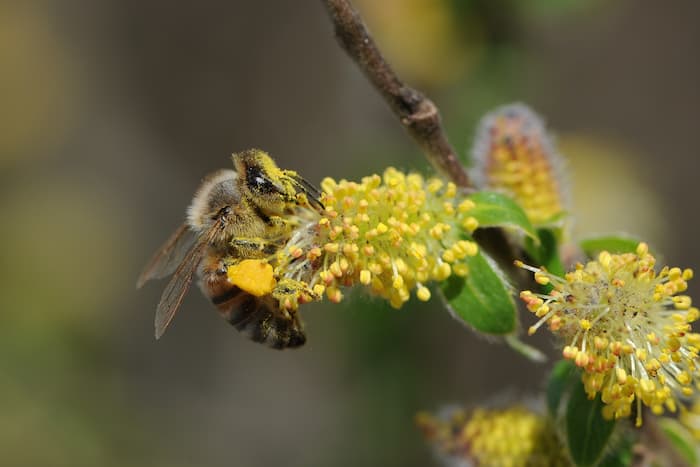
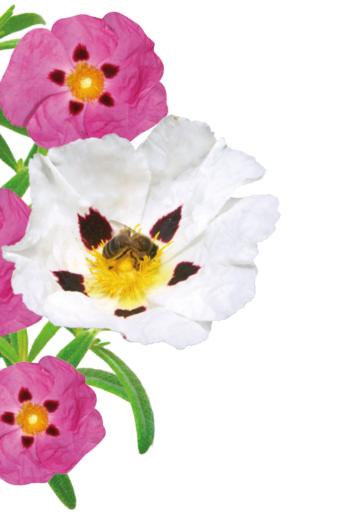
Carotenoids are natural, fat-soluble (soluble in fat) plant pigments found in many foods, flowers, and even algae. They are responsible for their red, yellow, and orange colorations. They can be found notably in carrots, tomatoes, bell peppers, or spinach. And among the best-known carotenoids, we find beta-carotene (cistus pollen), lycopene, lutein, and zeaxanthin (willow and fruit willow pollens).
- They help fight oxidative stress and eliminate free radicals that damage our body.
- They support immune function by stimulating the immune system's first line of natural or innate defense (white blood cells).
- They improve sun tolerance.
- They stimulate the production of melanin, the pigment that gives the skin a lovely tanned color.
- They counteract the immunosuppressive action of UV rays.
Polyphenols are synthesized by plants and constitute an important group of natural substances found in the plant kingdom. These micronutrients possess highly effective antioxidant properties to counteract reactive oxygen species. They belong to several families that can be broadly classified into flavonoids and non-flavonoids.
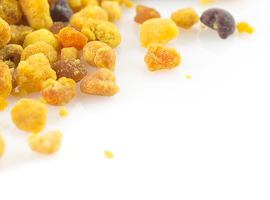
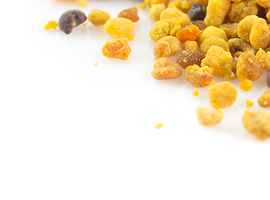
The pollens harvested by bees are heavy, sticky, and nutritious for the insect. They are rich in proteins but above all in protective substances to preserve the viability of the plant's male fertilizing cell against environmental aggressions (sun, oxygen) and desiccation. The polyphenol content, and particularly the flavonoid content, is very high in pollen.
From a therapeutic point of view, a wonderful synergy of polyphenolic compounds and carotenoids can be found in several monofloral pollens. The consumption of fresh frozen willow pollen, which is also known to be rich in zinc, could be essential in the prevention of degenerative eye diseases and prostate inflammation.
Polyphenols and Propolis
Numerous studies have shown that propolis is an important source of polyphenols, particularly flavonoids. Around thirty compounds have been identified, including flavones, flavonols, and flavanones; examples include chrysin, quercetin, pinocembrin, and galangin. Bacteriostatic effects have been attributed to pinocembrin (a flavone) and galangin. Bees thus instinctively employ the properties of polyphenols to "sanitize" their hive.
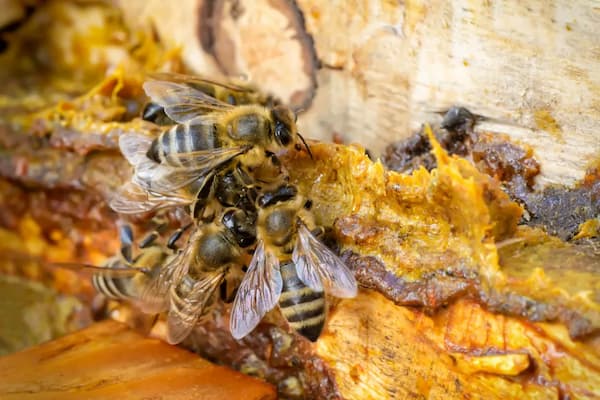
Polyphenols are found in the bud secretions of many trees such as birch, poplar, and fir. The chemical composition of propolis can therefore vary significantly, depending directly on the source foraged as well as geographic and climatic conditions. For example, propolis coming from Europe, South America, or Asia has different compositions and polyphenol contents, resulting in different antioxidant properties.
All studies point in the same direction and emphasize that hive products (propolis, pollen, and honey) must now be considered as a potential dietary source of antioxidants, and no longer simply as food with high nutritional value.
 Français
 English