Urinary Comfort (Organic)

Certified organic
Price: €25.00

card_membership By buying this product you can collect up to 25 loyalty points. Your cart will total 25 points that can be converted into a voucher of €1.25.

Directions for use

For adults at risk of urinary tract infections. A dietary supplement that combines the proven benefits of cranberry, bearberry, and Brazilian green propolis to help reduce the risk of recurrent cystitis or stop an infection in its early stages. Box of 40 capsules.

Read more
Practical informations :
  • Free delivery from €65 in France
  • In stock (444)
  • At home on monday 5 october 2026
    info
  • Help and advises 05 53 68 11 11
  • 20 years old french manufacturer
Description
Description

The Urinary Comfort product was designed using 3 ingredients recognized for their effects on both the Prevention and Protection axes against urinary tract infections.

  • 100% natural and certified ORGANIC formula
  • Enhanced triple action synergy: combines the recognized benefits of cranberry, bearberry, and Baccharis green propolis
  • High concentration: 3 capsules guarantee an intake of 36 mg of proanthocyanidins1

Specific Properties of Urinary Comfort ingredients

Brazilian Green Propolis

Baccharis green propolis has a bacteriostatic2 and bactericidal3 effect, limiting bacterial proliferation and allowing an optimal response from the immune system. The combination of cranberry and propolis also significantly reduces the virulence of Escherichia coli.

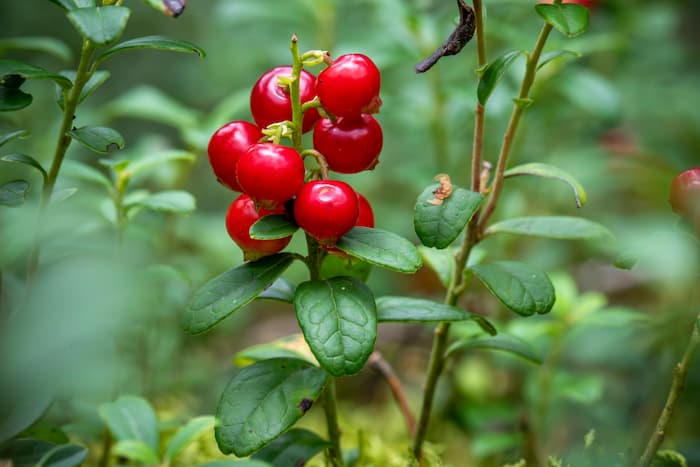
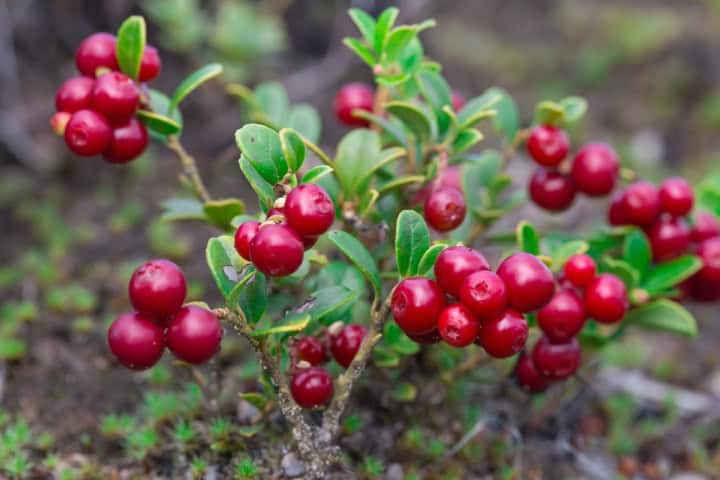
Cranberry

The cranberry selected by Pollenergie contains a high level of proanthocyanidins (PACs), a flavonoid4 that is a powerful natural antioxidant, contributing to the maintenance of urinary comfort*. Scientific studies have demonstrated the effectiveness of PACs in reducing the adhesion of certain strains such as E. Coli to the urinary walls. 3 capsules guarantee an intake of 36 mg of proanthocyanidins1.

*Anses, referral no. 2003-SA-052, 2004.

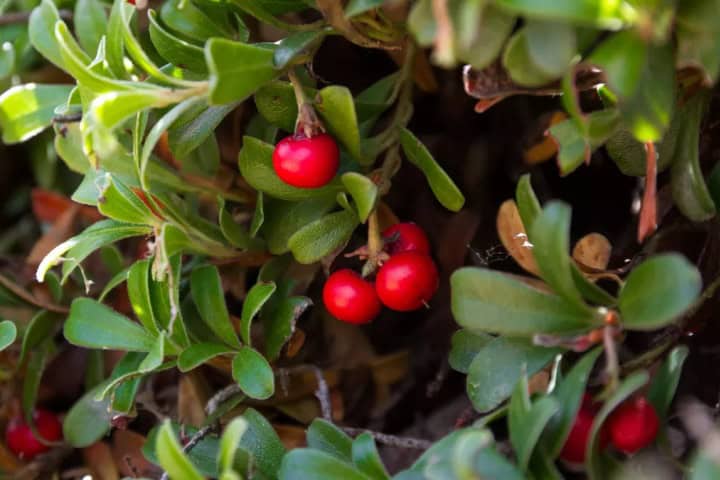
Bearberry

Bearberry leaves, nicknamed "bear's grape", contain phenolic heterosides5 , including arbutin, which is absorbed in the small intestine and then transformed into hydroquinone derivatives in the liver before being able to exert its powerful antiseptic effects.


1Proanthocyanidins are flavonoid compounds present in many plants at varying concentrations. They are essentially polymer chains of flavonoids.

2The term bacteriostatic refers to the action of certain substances that suspend the multiplication of bacteria, leading to their aging and death.

3A bactericidal substance is a substance with the ability to kill bacteria.

4Flavonoids are plant-derived substances found in fruits and vegetables, as well as in wine and tea. They act as antioxidants.

5Heterosides (or glycosides) are molecules resulting from the condensation of a sugar (ose, then called a glycone) and a non-carbohydrate substance (called an aglycone or genin). These two elements are joined by a so-called glycosidic bond, the type of which defines a classification of the glycoside.

Ingredients
Ingredients

Per 3 capsules: 360 mg of organic cranberry berry powder (Cranberry), organic green propolis powder (247 mg of organic green propolis, organic acacia gum), 219 mg of organic bearberry dry extract. Anti-caking agent: magnesium carbonate. Coating agent: organic marine capsules (organic fish gelatin, soy lecithin).

Packaging: Pill bottle containing 40 capsules.


Quality criteria of our propolis

1. The harvesting method

In Europe, there are two practices: scraped propolis and mesh propolis. Beekeepers collect propolis either by scraping the hive frames or by the so-called "mesh" method. The latter consists of placing meshes above the hive frames in the spring and removing them in September. This method yields fresh propolis, rich in active ingredients, non-oxidized, and containing very little waste.

Scraped propolis comes from scraping the frames and contains hive treatment products, wax, and other toxic substances. Unfortunately, it is marketed by various brands. Even in an organic hive, there are many pollutants in this propolis, and it is even worse if the hive is old. This propolis is only fit to be thrown away. Is this stated on the packaging? No, of course not. Those who use scraped propolis do not brag about it!

All our propolis products are systematically analyzed to guarantee our customers a product free of heavy metals, including those that do not have organic certification.

2. Botanical origin

The botanical origin is what makes propolis unique. There are several types of propolis depending on the plants present in the hive's geographical area, the availability of plants during the season, and the bee species. This is why we speak of green propolis when it comes from Baccharis, red propolis for Dalbergia, and brown or black propolis when it comes from poplar. Each botanical origin produces specific organic compounds involved in its defense mechanism. Therefore, propolis has a unique chemical composition, characterized by a variable polyphenol profile.

3. Guaranteed polyphenols

On the label, check that the product has a standardized active ingredient content (polyphenols). Propolis containing 25% or 30% polyphenols is magical! Unfortunately, the law does not require this to be stated on the label. Also, carefully check for a guarantee of the absence of heavy metals and pesticides. Beware of brands that do not state this!

Directions for use
Directions for use

Take 3 capsules of 300 mg daily (1 capsule in the morning, 1 capsule at noon, 1 capsule in the evening) for 7 days with meals and a large glass of water. If you have an early-stage infection, take all 3 capsules at once on the first day.

It is recommended to increase your water intake, preferably water rich in bicarbonate (about 1.5 to 2 liters per day), during the 7-day period.

Store at room temperature in a dry place.

Prevent and relieve
Prevent and relieve

What Is Cystitis or a Urinary Tract Infection?

The scientific term "cystitis" refers to an inflammation of the bladder. In the vast majority of cases, it is caused by the proliferation of germs, particularly enterobacteria of fecal origin that belong to the Enterobacteriaceae family, which constitutes one of the largest families of bacteria. In more than three-quarters of cases, Escherichia coli bacteria are to blame. However, Proteus mirabilis, Klebsiellae, and Staphylococcus saprophyticus bacteria are also sometimes the cause.

Are Urinary Tract Infections Just a Women's Problem?

Cystitis, or a urinary tract infection (UTI), is an extremely common condition. While men are not immune, women are significantly more often affected, as 80% of them will deal with cystitis at least once in their lifetime.

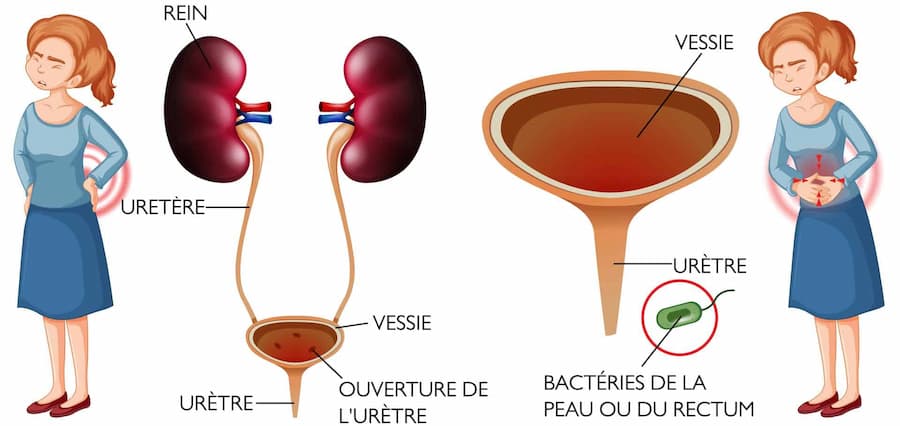
This female predominance is explained by anatomy. And for good reason! In women, the external opening of the urethra is very close to the anus, which is abundant in bacteria. These bacteria have only a short distance to travel to reach the entrance of the urethra.

Schéma d'une cystite

Many factors favor the proliferation of bacteria as well as their transit from the anus to the urethra:

  • The use of aggressive antiseptic products for vaginal hygiene disrupts the bacterial flora that is supposed to protect the vagina.

  • Sexual intercourse can weaken the urethra.

  • Wearing tight pants and underwear or garments made of synthetic materials creates an environment conducive to the proliferation of germs, which thrive in warm, damp environments.

  • The drop in estrogen concentrations during menopause makes this period particularly delicate for women: the thinning of genital tissues and the decrease in vaginal secretions provide a favorable ground for bacterial proliferation.

  • An insufficient fluid intake limits the frequency of bladder emptying.

A urinary tract infection can affect any part of the urinary system, thereby disrupting the entire urine cycle: from its production by the kidneys (blood filtration and fluid regulation) to its routing through the ureters to the bladder (reservoir), until its final evacuation through the urethra.

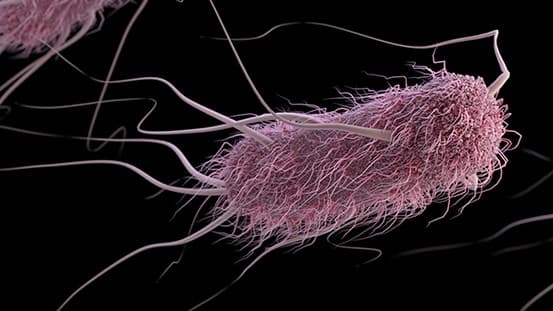
Normally, urine is sterile, and the urinary system possesses numerous defense mechanisms against infections (urine flow, urine acidity, bladder wall, etc.). However, several factors essential to the infection process allow pathogenic strains of E. coli to selectively colonize the epithelium of the urethra.

E. coli responsable des infections urinaires

Adhesins, which are particularly expressed in pathogenic strains of E. coli, are components of the bacterial cell membrane. They promote the adhesion of E. coli to epithelial cells. This adhesion is essential for the bacteria to persist on the mucosa despite urine flow and peristaltic movements.

Among the many types of adhesins identified, one specific type stands out: P-fimbriae. They bind strongly to epithelial cells (cells that form the tissue covering all surfaces of our organism, facing outward or inward) by specifically recognizing a glycolipid receptor present on the surface of bladder and kidney cells. The density of these receptors varies from person to person, which could explain the higher or lower susceptibility of individuals to urinary tract infections. Furthermore, adhesins promote the growth and proliferation of E. coli.

The First Signs of Cystitis

1. Burning, urgency, and frequent urination

When passing urine, people suffering from cystitis experience intense burning or stinging sensations, along with a frequent and urgent need to urinate. In addition to these symptoms, there is often a feeling of heaviness in the lower abdomen.

2.Cloudy urine, presence of blood

In cases of bacterial cystitis, the urine is usually cloudy, which indicates the presence of white blood cells responding to the infection. Furthermore, the urine may contain streaks of blood due to the inflammation of the bladder. This is not at all a sign of severity. In rare cases, cystitis remains asymptomatic.

Complications of Urinary Tract Infections

Recurrent Cystitis

Cystitis is considered recurrent when at least 4 episodes occur within a year. Nearly half of all women who experience cystitis go on to develop recurrent infections. Recurrent cystitis is not trivial. On average, each episode of cystitis causes 6 days of symptoms, 2 days of reduced activities, 1 day of inability to work, and half a day in bed!

Pyelonephritis

It is important to emphasize that simple cystitis does not generally cause a fever or lower back pain. These symptoms are instead indicative of a complication of cystitis, particularly pyelonephritis, which is an inflammation of the kidney (bacteria travel up the ureters to reach the kidneys) accompanied by a fever and often chills. If these symptoms are present, a medical consultation is required.

Allopathic Treatments for Cystitis

Bacterial urinary tract infections are easily and quickly treated with antibiotics over periods of 3 to 7 days. It is advisable to increase water consumption during this period to increase urinary flow. Once treated, symptoms normally disappear within 24 to 48 hours. If there is no improvement after 48 hours, it is often because the chosen antibiotic was not the right one. However, this practice is not without consequences.

Busserole pour prévenir les infections urinaires

Bearberry leaves, also nicknamed "bear's grape," contain phenolic glycosides, including arbutin. The latter is absorbed in the small intestine and then transformed into hydroquinone derivatives in the liver before it can exert its p

A Dutch study compared the efficacy of a cranberry extract (1 g/day) against a combination of antibiotics in 221 premenopausal women prone to recurrent cystitis. After one year, the results were surprising. While the cranberry extract was slightly less effective than the antibiotics, the researchers notably found that 90% of the bacteria responsible for these infections became resistant to antibiotics in the antibiotic group. Beyond the dangers of the widespread and systematic use of antibiotics, this study shows that there are natural alternative solutions based on plants or beehive products, without the risk of developing resistance (Beerepoot et al. 2011).

owerful antiseptic effects.

The effectiveness of cranberry extract for urinary tract infections

Beehive Products to Relieve Cystitis

Escherichia Coli is a very common bacterium that sticks to the walls of mucous membranes. E. coli is not harmful as long as it competes with other commensal bacteria. However, when the intestinal flora is weakened, E. coli sometimes takes over and settles in comfortably, even causing infections. If you are prone to recurring urinary tract infections, you must start by modifying the environment in which the bacterium thrives. The first thing to do is therefore to strengthen the intestinal flora by taking probiotics.

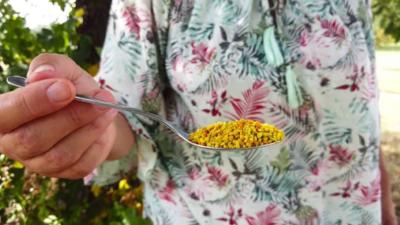
Pollen de ciste pour prévenir les cystites

Cistus pollen, which is the richest in lactic ferments, has the most significant probiotic effects. Its richness in vitamin E strengthens the intestinal epithelium, reinforcing our natural barrier and limiting gut porosity. To be taken as a 6-week course at a rate of one tablespoon per day in the morning during breakfast.

Cistus pollen is also very beneficial after a course of antibiotics, as the lactic acid bacteria temporarily take over from a compromised gut microbiota and help restore it. The fiber in the pollen acts as a prebiotic and also supports this flora.

To stop an early-stage infection or tackle recurring cystitis, Urinary Comfort is a dietary supplement combining the recognized benefits of cranberry, bearberry, and green propolis. This unique formula helps limit the risk of recurring cystitis or stop a developing infection in its tracks.

Cranberry to prevent urinary tract infections

Cranberries contain a high level of proanthocyanidins (PACs), a powerful natural antioxidant that helps maintain urinary comfort. Studies have demonstrated the effectiveness of PACs in reducing the adhesion of certain strains, such as E. Coli, to the urinary tract walls. 3 capsules guarantee an intake of 36 mg of proanthocyanidins.

Green propolis to prevent urinary tract infections

Organic Baccharis green propolis from Brasil has a bacteriostatic and bactericidal effect, limiting bacterial proliferation and allowing an optimal immune system response. The combination of cranberry and propolis also significantly reduces the virulence of Escherichia coli.

Bearberry to prevent urinary tract infections

Bearberry leaves, also known as “bear's grape,” contain phenolic glycosides, including arbutin. Arbutin is absorbed in the small intestine and then converted into hydroquinone derivatives in the liver before it can exert its powerful antiseptic effects.

Customer reviews
Customer reviews
Data sheet
Data sheet
  • Product Type
    Propolis
  • Type of propolis
    Green propolis
  • My needs
    Intestinal balance
    Urinary infection
    Pregnant women and breastfeeding
  • Label
    Certifié bio
  • Format
    Capsule

You might also like

Loading...
Back to top