This book by Olivia Metral, a doctor of pharmacy, is precise, well-researched, and... [Read...]
Apitherapy: When Bees Help Treat Asthma and Allergies
This book takes us on a remarkable journey: the discovery of how to treat these conditions (asthma, allergies) by modifying the genetic abnormalities that contribute to them. Patrice Percie du Sert introduces us to the intersection of three fields that rarely overlap: beekeeping (the raising of bees), apidology (the science of bees), and medicine. Text in French.
Read more- Free delivery from €65 in France
- In stock (31)
-
At home on monday 5 october 2026info
- Help and advises 05 53 68 11 11
- 20 years old french manufacturer
Summary
Bees can treat asthma and allergies! The therapeutic promise is great. Patrice Percie du Sert has decoded the mechanisms of action of substances emitted by bee larvae – pheromones – which are a chemical language through which they express their needs to the worker bees.
The author hypothesizes that one or more bee larvae pheromones can put some asthmatic individuals into total or partial remission from their condition. His argument is supported, among other things, by a scientific publication showing that asthma induced in mice can be completely controlled by one of these pheromones. This pheromone makes the inflammation of the lung tissue completely disappear.
Thanks to the illustrations and scientific references, you will understand throughout the pages how these substances can treat asthmatic people, leading to a total or partial remission of their condition. A new therapeutic path.
The Author
A French specialist in fresh pollen and founder of the company Pollenergie, Patrice Percie du Sert teaches apitherapy within the Francophone Apitherapy Association (AFA) and gives lectures at numerous conferences and trade shows. He has set up an experimental pavilion for the treatment of asthma, allergies, and migraines by directly inhaling the air coming from the hives, at his wellness facility near Agen, in the Lot-et-Garonne region: "Le Miel et l'Eau". An agricultural engineer with a passion for science, he is the author of Ces pollens qui nous soignent, published by the same publisher.
Not All Pollens Are Created Equal When It Comes to Allergies
Fortunately, not all pollens make you sneeze! To assess their allergenic potential, several factors are taken into account:
- the nature of the protein particles they release
- the size of the pollen grain, which will penetrate further into the respiratory tract the smaller and lighter it is
- the amount of pollen in the air.
The species most frequently responsible for allergies are those with anemophilous pollen, meaning it is transported from one plant to another by the wind. Highly allergenic pollens notably include birch, cypress, and ragweed.
On the other hand, those carried by insects, known as entomophilous pollens, are large, sticky, and cling to the insects' hairs thanks to their rough texture. Filled with energy-giving substances, they contain 20% protein, 25 to 50% sugars, vitamins, antioxidants, fiber, and minerals.
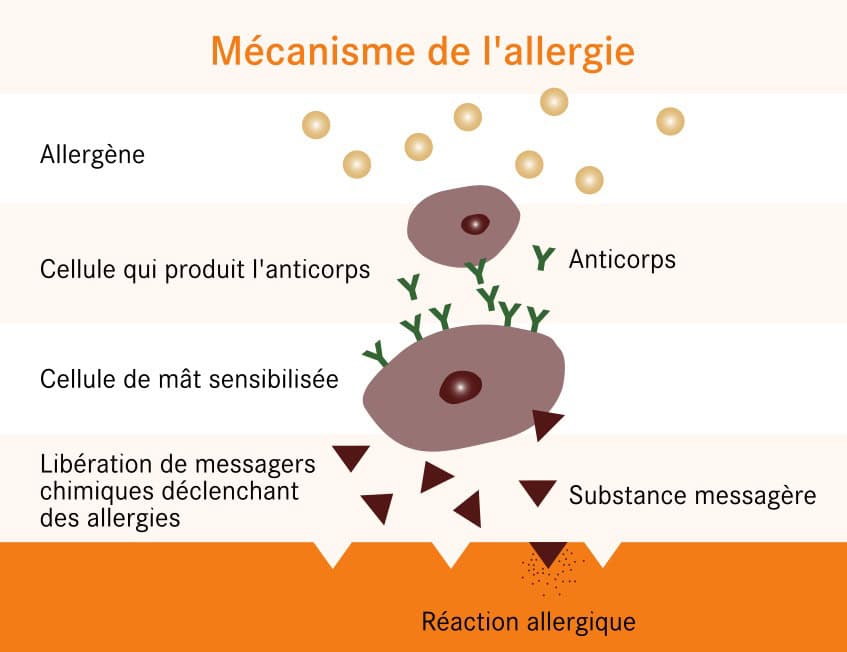
By regularly entering the body and coming into contact with respiratory mucous membranes that are increasingly weakened by atmospheric pollution (ozone, fine particles), anemophilous (wind-borne) pollens trigger a hostile reaction from our immune system. This reaction can be excessive. It then generates a significant release of pro-inflammatory histamines, causing rhinitis, hay fever, and even allergic asthma.
These seasonal allergies continue to claim victims. There are now 4 times more cases than thirty years ago, accounting for practically 20% of the population! They have debilitating repercussions on daily life: disrupted sleep and physical activity, intense fatigue, and decreased academic or professional performance. The impact on quality of life is a key marker of their severity.

Protecting Yourself from Allergies Thanks to Bee Pollen!
To limit the impact of these allergic episodes, it is important to anticipate and work on your body's terrain with fresh frozen pollens!
Bee pollens preserved in their fresh state have many benefits. Their B-group vitamins, particularly B3 (niacin) and B2 (riboflavin), contribute to the normal functioning of mucous membranes. The vitamins in pollen also help fight against oxidative stress in cells, as do their vitamins C and E. This latter action is reinforced by trace elements. Indeed, pollens are naturally rich in zinc and manganese, and contain copper and selenium—all nutrients that also contribute to the normal functioning of the immune system.

Imbalances in the intestinal microbiota (dysbiosis) have been linked to the dysfunctions associated with allergies. This strong relationship between gut flora and allergies suggests thata specific intake of probiotics could help prevent allergies. The lactic ferments in fresh pollen thus contribute to increasing the barrier effect and stimulate the secretion of mucus in the intestine, which concentrates 70% of the immune system's effectors.
This combined set of effects limits the entry of elements capable of reacting with the immune system, complementing the immunomodulatory action of the pollen's polyphenols. Among our pollens, cistus pollen features the highest amount of lactic ferments with a "probiotic" action.

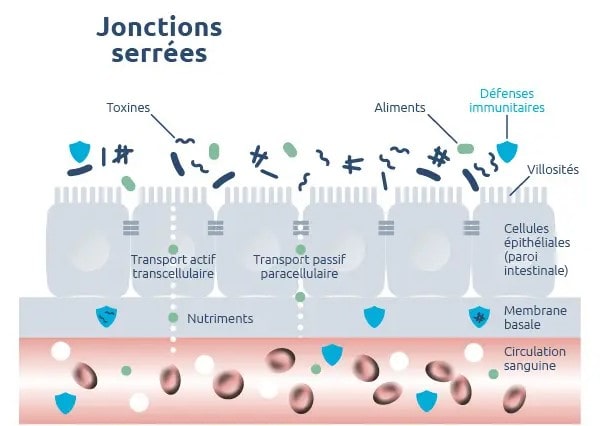
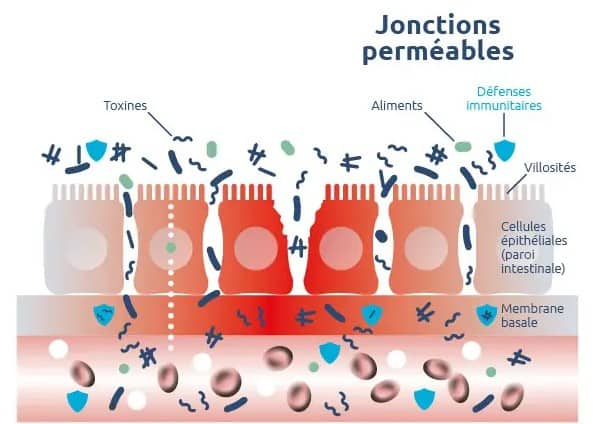
Fresh cistus pollen also helps strengthen the intestinal mucosa to fight against intestinal permeability (leaky gut). If the tight junctions of the intestinal epithelial cells loosen, they allow large, undesirable molecules to pass into the body, risking numerous disorders: immune deregulation, osteoarticular problems, inflammation, allergies... By providing vitamin E and carotenoids, cistus pollen helps strengthen these junctions, promoting a competent selective barrier. Furthermore, the gum rockrose flower (Cistus ladanifer), which blooms in May-June, is particularly polliniferous. It provides a highly monofloral, very homogeneous pollen, guaranteeing the absence of contaminating pollens such as grass pollen, for example.
Cistus pollen is the only product that revitalizes both the intestinal mucosa and flora thanks to a synergy between a complex microbial system and a set of antioxidant micronutrients. The whole process works because the microflora of the frozen pollen and its micronutrients are "living" and preserved thanks to our patented process.
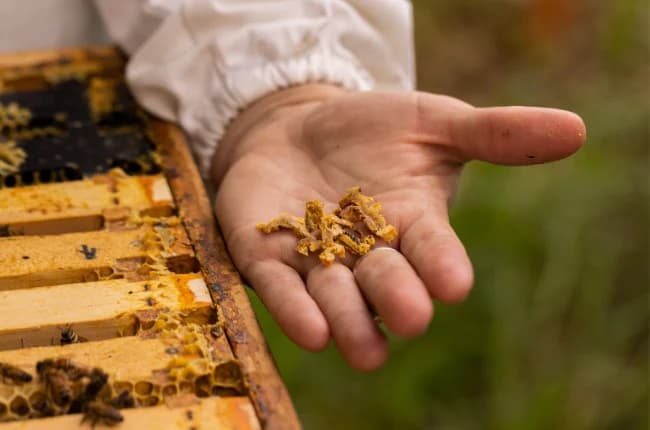
Propolis possesses important anti-inflammatory properties, some of which can even rival cortisone. This resin is also a fantastic antioxidant, the most powerful among beehive products. Certain publications thus report that propolis increases the activity of enzymes that fight oxidation while reducing oxidative stress molecules, symptoms, and inflammation.

Thanks to its polyphenols, propolis can prevent the action of certain mediators and the activation of key allergy cells. Consuming it before the allergy season strengthens the system of people sensitive to pollen pollution, making it more resistant to pollen aggressions. Its anti-inflammatory and antioxidant properties can also help to better withstand symptoms during the allergy season.
"Literature shows that propolis is capable of blocking the action of certain mediators and the activation of key allergy cells through its polyphenols. When consumed ahead of the allergy season, propolis strengthens the system of the allergy sufferer or the person sensitive to pollen pollution, making them more resilient against pollen aggression. And if the pollen and allergy season is already underway, propolis also helps to make you feel better when you're under the weather! It strengthens the body and helps to better fight symptoms by exerting its anti-inflammatory, antioxidant, and immunomodulatory properties." Extract from the article Hay Fever and Propolis published in the Revue Abeilles & Fleurs n°774
Pollenergie offers propolis with a high concentration of active ingredients, thanks to manufacturing processes that ensure an exceptionally high antioxidant content. According to numerous studies, poplar propolis (also known as “extra-strong”) is the most suitable for periods of seasonal sensitivity due to its anti-inflammatory properties.
Our Advice for Countering Seasonal Allergies
The ideal approach is to start a preventive course 3 weeks before the peak period and to continue taking it throughout the entire critical period:
- 1 tablespoon of cistus pollen every day during breakfast, to be mixed into a fruit salad, honey, or applesauce for better absorption.
- 2 capsules of extra-strong propolis per day as a preventive measure, up to 4 capsules during the peak period. Also, remember to top up on vitamin C and quercetin!
- or 1 single-dose unit of extra-strong poplar propolis (with or without alcohol) per day for prevention, and up to 2 single-dose units or ampoules per day during the critical period.
- Supplement if needed with 2 to 3 sprays of propolis spray to quickly soothe sore throats at the first signs of irritation.
Anti-Hay Fever Apigourmet Recipe
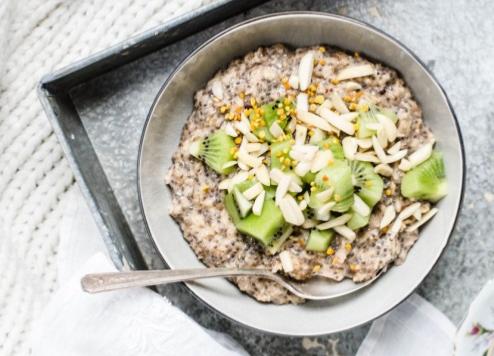
Chia seed pudding with apple, kiwi, and fresh frozen cistus pollen!
- 40 g of chia seeds
- 15 cl of plant-based milk
- 1 tablespoon of rosemary honey (an excellent cholagogue and choleretic)
- 1 kiwi
- 1 apple
- 1 tablespoon of cistus pollen

Recipe
1. Pour the milk into a bowl. Add the honey, then the chia seeds and stir well. Let it rest in the refrigerator overnight.
2. Cut slices of kiwi and apple. Place the slices vertically against the walls of a glass, alternating layers with the chia pudding.
3. Sprinkle with cistus pollen and enjoy!
Sources:
- Plantes & Santé magazine, issues 145 and 221
- Rebelle Santé magazine, No. 153
- Santé Corps Esprit magazine, No. 34
- Les trésors de la Ruche by Nathalie Cousin
- Abeilles & Fleurs magazine, issues 774 and 792
-
Product TypeBook
-
AuthorPatrice Percie du Sert
-
PublisherGuy Trédaniel Editeur
-
Publication date2022
-
Number of pages118
-
Dimension145x210 mm
Français
English