Les frais de livraison sont offerts à partir de 65 € d'achat pour la France métropolitaine. Livraison en Point Retrait à La Poste, en relais Pickup ou en consigne sous 48h.
There are no specific regulations regarding the quality or concentration of propolis. Everyone makes their own claims… So how can you make sense of the labels and know if a product is truly effective?
What Are Polyphenols?
Hive products such as propolis are made up of numerous components beneficial to health. Among these, polyphenols currently enjoy a growing reputation.
Polyphenols are synthesized by plants to defend themselves against various threats and constitute a major group of natural substances present in the plant kingdom. They are powerful antioxidants that can help neutralize free radicals, which are unstable compounds that accumulate in the body and cause damage at the cellular level (oxidative stress). They are commonly subdivided into flavonoids or non-flavonoids.
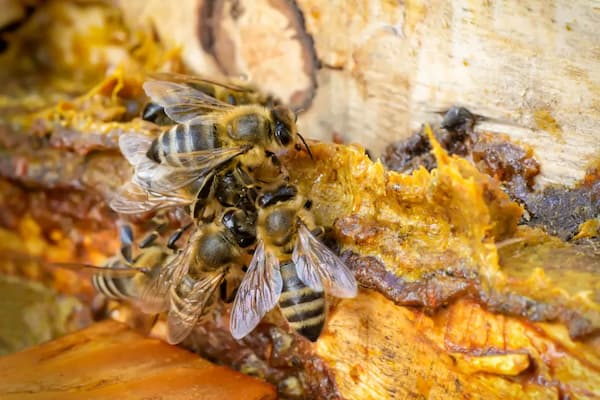
Propolis is an important source of polyphenols, particularly flavonoids. Bees instinctively utilize the properties of polyphenols to "sanitize" their hive. It is their most crucial chemical weapon for fighting parasites and pathogens. Recent studies have even revealed that propolis can play a more subtle role in the colony's immunity mechanisms. To some extent, we can speak of colony self-medication.
The antioxidant activity of propolis is mainly due to these polyphenolic compounds. It is therefore essential to choose a propolis standardized in polyphenols to guarantee its effects and efficacy.
Indeed, studies have reported that the antioxidant activity of propolis reduces the risk of certain diseases (cancer, diabetes, cardiovascular, and neurodegenerative diseases) by limiting oxidative stress:
It neutralizes and traps free radicals.
It protects cell membranes against the effects of free radicals.
It strengthens the antioxidant activity of glutathione, which is necessary for protecting human body cells.
Why guarantee a minimum percentage of polyphenols?
To date, there is no consensus on the optimal dose of commercially available propolis products intended for therapeutic purposes. However, at least two quality standardization methods exist, which unfortunately are never applied. One of them is the Gardana et al., 2007 standard, which reports that flavonoids have a bioavailability greater than 85%.
Total flavonoids < 11%* = poor quality
Total flavonoids 11> <14%* = acceptable quality
Total flavonoids 14> <17%* = Good quality
Total flavonoids > 17%* = Very good quality
*Percentage of flavonoids present in the propolis powder. For comparison, our extra-strong poplar propolis capsules contain 140mg of propolis concentrate guaranteed at 50mg of polyphenols, which is 35%.
How to Decipher a Propolis Label?
A 30% propolis solution corresponds to 30 g of raw propolis in 100 g of extraction solvent. By no means does this represent any indication of the product's actual quality or its true content!
A 30% purified propolis indicates that the filtrate obtained from maceration contains 30% dry matter (or active matter). Dry matter is often correlated with the content of active ingredients. That is better, but you still do not know the actual content of active ingredients in the product.
Pollenergie distinguishes itself by displaying the minimum quantity of polyphenols per serving. We prefer providing objective information and prioritizing high concentrations of active ingredients. Whether for prevention or support, we have formulated our propolis doses and tailored our usage advice to achieve an optimal concentration of polyphenols.
 Français
 English