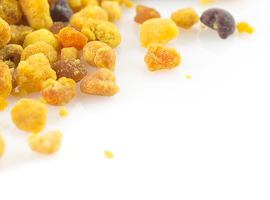
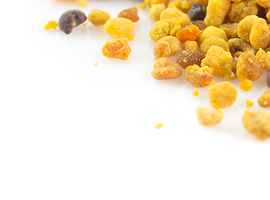
Fresh rockrose bee pollen (Organic)

Certified organic
Price: €27.90

card_membership By buying this product you can collect up to 27 loyalty points. Your cart will total 27 points that can be converted into a voucher of €1.35.

Directions for use

Recommended for persistent fatigue and/or digestive issues. Organic rockrose bee pollen is also recommended as a preparatory supplement for professional and amateur athletes. Store the package in the freezer immediately upon receipt.

Read more
Practical informations :
  • Free delivery from €65 in France
  • In stock (1498)
  • At home on monday 5 october 2026
    info
  • Help and advises 05 53 68 11 11
  • 20 years old french manufacturer
Description
Description

Balls full of energy

Cistus pollen frozen fresh contains the highest levels of carotenoids and lactic acid bacteria. It strengthens the microbiome, the body’s first natural barrier against external stressors. The micronutrients in this pollen also make it an excellent ally for preparing for periods of intense physical and mental exertion, by boosting natural resilience and energy levels.

Specific properties of rockrose pollen

Intestinal comfort

Rockrose pollen helps restore internal balance so you feel in top form. Combining the prebiotic action of fiber with the probiotic action of bee-specific lactic acid bacteria (primarily Lactobacillus and Bifidobacterium), which introduce beneficial bacteria to the intestinal flora, rockrose pollen is an excellent synbiotic.

Natural defenses, protection

Organic rockrose pollen is naturally rich in vitamins B2 and B3, which help maintain healthy mucous membranes. 60 to 70% of the immune system is located in the gut. Therefore, improving digestive health leads to stronger natural defenses. Cistus pollen is naturally rich in vitamin B9 and a source of vitamin B6, iron, zinc, and selenium, which contribute to the normal functioning of the immune system.

Mental and physical vitality

Cistus pollen is naturally rich in vitamin B2, which helps reduce fatigue and supports normal energy metabolism.

Ingredients
Ingredients

Organic hawthorn pollen (Crataegus sp.), minority of other pollens from the surrounding flora. No colorants or preservatives. Hawthorn pollen grains are harvested between April and May. Predominantly sweet flavor with hints of bitterness. Melting to silky texture. Light yellow color.

Packaging

250 g tray under protective atmosphere. Origin: European Union. Store in the freezer between -15° and -18° C upon receipt.

Fresh bee pollen is a raw, living, highly complete and complex food that degrades very quickly in the air and at room temperature. Pollenergie packages its pollens using a patented process, combining a controlled atmosphere with freezing, allowing them to travel for 7 days at room temperature without any alteration. Once delivered, the pollen can be safely refrozen to guarantee its full nutritional potential.

Discover our patented process

Can bee pollen be consumed after the expiration date?

Even if the deadline has passed, don't throw away your pollen! It can be safely consumed if it has been kept in the freezer without interruption—even for a whole year! Also, make sure not to leave your tray open to the air for more than 72 hours. If you have any doubts, give the pollen to your plants: mixed with potting soil or compost, it makes an excellent fertilizer!

BBD vs. Use-By Date: The date indicated on our pollens and other products is a Best-Before Date (BBD). It is indicative: after this period, the product presents no health hazard, but may lose flavor or nutritional effectiveness.

Directions for use
Directions for use

Storing fresh bee pollen

As soon as you receive it, place your pollen tray in the freezer to preserve all its nutritional qualities. It is not necessary to defrost the pollen before tasting it. Thanks to its low water content, the pollen remains melt-in-the-mouth and easy to scoop, even when frozen. You can therefore consume it directly out of the freezer.

How to take bee pollen?

Contrary to popular belief, pollen is not more effective on an empty stomach. The ideal way is to consume it during a light meal to help your body better absorb its entire cocktail of nutrients and probiotics. For daily use, one tablespoon is generally sufficient. However, this dosage may vary according to different profiles:

  • Adults: 1 tablespoon (12 to 15 g) per day. This dose can be doubled for athletes or during an intensive 3-week course.
  • Vegetarians & food lovers: up to 4 tablespoons per day without risk of overdose, as pollen is a natural and non-toxic food.
  • Children (up to 12 years old): 1 teaspoon per day. If they ask for more, the child's appetite remains the best indicator of their needs.
  • Sensitive intestines: start with 1 teaspoon per day for a week to avoid the transit-accelerating effect due to fiber, then increase gradually.

Instinct is a good advisor, and wanting to eat more simply means that we need it.

Can bee pollen be taken continuously?

It is often forgotten, but the pollen collected by bees is a food. There is no risk of toxicity in taking it daily—quite the contrary! Pollen consumption is even recommended for people who wish to naturally support chronic health problems or prevent disorders linked to the body's aging. However, its nutritional richness can sometimes saturate the system; a temporary interruption of the course is then recommended to better resume afterwards.

Errors to avoid

Taking pollen on an empty stomach

Consuming bee pollen on an empty stomach

To better enjoy their benefits without discomfort, it is important to consume Aristée pollens preferably during breakfast (or during a light meal / snack) with fresh fruit or compote. Their richness in enzymes and lacto-ferments can indeed cause bloating, flatulence... And they will also be less well assimilated!

Mixing pollen with hot food

Mixing bee pollen with hot food

To preserve the precious lacto-ferments of fresh pollen, never mix it directly with hot food or drinks. Thermal immersion destroys its enzymes. You can, however, consume a hot drink alongside it: the heat dissipates quickly in the stomach, protecting its nutritional qualities. The important thing: do not mix them before ingestion.

Switching bee pollens from one day to the next

To make the most of the benefits of a floral origin, it is important to follow a consistent course for at least 3 weeks. This allows the body to better absorb its richness for better results on vitality, protection, and well-being. You can then choose another floral origin for the following 3 weeks.

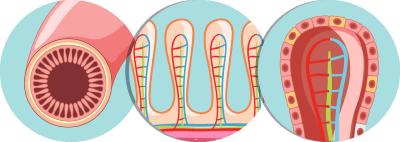
Intestinal balance
Intestinal balance

Pollens frais : des alliés pour nos intestins

L’équilibre naturel de la flore intestinale est essentiel au bon fonctionnement du système digestif et influence directement notre système immunitaire et notre vitalité. Avec les produits de la ruche, notamment le pollen congelé à l’état frais, vous pouvez retrouver un mieux-être intestinal qui rejaillira sur votre état général.

Ferments lactiques du pollen frais

Le pollen entomophile naît de la rencontre des abeilles et des fleurs. Il renferme bon nombre d’éléments nutritifs et bénéfiques pour l’organisme. Parmi ces éléments, on va trouver une grande partie des vitamines C, B et E, des antioxydants (caroténoïdes et polyphénols), des fibres, des enzymes et des ferments lactiques spécifiques à l'abeille.

D’où viennent ces ferments lactiques ?

Ces fements sont élevés par les abeilles sur le nectar à l’intérieur de la ruche. Avant de partir butiner, elles remplissent leur jabot de nectar et le régurgitent pour humidifier les pelotes de pollen. Les ferments qui sont dans le nectar vont donc ensemencer les pelotes. Cette pratique, digne de l’industrie alimentaire, est en fait maîtrisée par l’abeille depuis plusieurs millions d’années. Le pollen de ciste présente une grande quantité de ferments lactiques appartenant à la famille des lactobacilles à « effet probiotique », alliés d’une flore intestinale équilibrée.

En consommant du pollen frais, on apporte des "bonnes bactéries" à notre microbiote. On prévient ainsi les risques de dysbiose responsable de pathologies intestinales, de grande fatigue et d’un risque d’infections accru. De nombreuses études ont d’ailleurs démontré qu’une amélioration de la flore intestinale renforce l’immunité localisée en grande partie (70%) autour de nos intestins. Le pollen de ciste va augmenter nos défenses naturelles, notamment lors des changements de saison. Il contribue également à consolider la muqueuse de l’intestin pour lutter contre la porosité intestinale.

Les jonctions serrées des cellules de l’épithélium intestinal s’écartent et laissent passer de grosses molécules indésirables dans l’organisme, risquant entraîner de nombreux désordres : dérèglement immunitaire, problèmes ostéoarticulaires, inflammations, allergies. En apportant de la vitamine E et des caroténoïdes, le pollen de ciste participe à consolider ces jonctions favorisant une barrière sélective compétente, nous permettant aussi de mieux profiter des micronutriments précieux de notre alimentation. Une étude animale a d’ailleurs démontré que la consommation de pollen de ciste frais a permis de réduire significativement l’inflammation dans un modèle de maladie cœliaque comparativement au pollen de ciste sec.
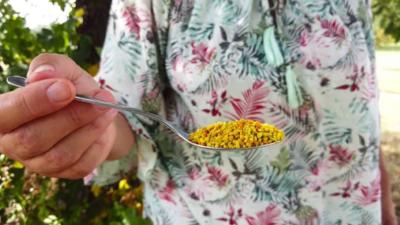
Le pollen de ciste est le seul produit qui dynamise à la fois la muqueuse et la flore intestinales, grâce à une synergie entre un système microbien complexe et un ensemble de micronutriments antioxydants. Le tout fonctionne parce que la microflore du pollen congelé et ses micronutriments sont « vivants ».

Comment prendre le pollen frais ? En cures régulières (3 à 4 par an) ou bien quotidiennement en cas de problèmes chroniques. Il se prend à raison d’une cuillerée à soupe, au cours du petit-déjeuner ou d’un repas léger. Pour une assimilation optimale, il est recommandé d’associer le pollen frais avec des fruits et des légumes de saison en salade. Ne surtout pas chauffer le pollen, car cela nuirait à leur population de ferments lactiques et d’enzymes, si importantes pour notre santé intestinale et notre vitalité.

Dans la pharmacie des abeilles, en cas de constipation, pensez aussi au miel ! Grâce à ses propriétés laxatives douces, le miel peut aider à retrouver un transit de qualité. Grâce à sa haute teneur en sucre, il crée un appel d’eau vers la lumière intestinale. Préférez celui d’acacia le plus réputé pour cette indication à raison de deux cuillerées à café de miel dans 1 tasse d’eau froide par jour.

En cas d’infection intestinale, la propolis sera également votre alliée grâce à ses actions anti-infectieuses et immunorégulatrices. Préférez les gélules pour une diffusion des principes actifs au niveau intestinal et optez pour la propolis de peuplier qui a par ailleurs une action anti-inflammatoire.

Customer reviews
Customer reviews
Video
Data sheet
Data sheet
  • Product Type
    Fresh pollen
  • My needs
    Constipation
    Intestinal balance
    Inflammatory diseases
    Dietary rebalancing
    Malnutrition and deficiencies
    Natural defenses
    Preserving your eyesight
    Skin and hair
    Seasonal allergies
    Antioxidants
    Physical and mental fatigue
    Urinary infection
    Treatment support
    Sport
    Pets
  • Label
    Certifié bio

You might also like

Loading...
Back to top