Français
 English

Subtotal
€0.00
Checkout
Structure of pollen grains
What's the story behind this superfood?
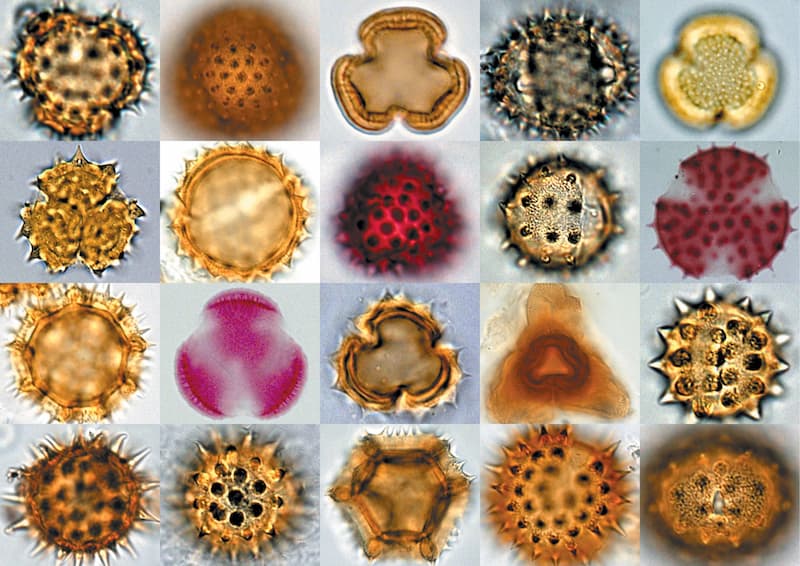
Pollen grains are undoubtedly among the most beautiful microscopic structures in nature. Despite their tiny size (generally 10 to 250 μm), pollen grains are extraordinarily well-designed containers for transporting male reproductive cells to the female reproductive cells of the two main groups of plants: angiosperms (flowering plants) and gymnosperms (conifers and related plants).
A Jewel of Nature
The range of their shapes is extraordinary! Moreover, observing their structure under a microscope (sometimes even fossilized) allows scientists to identify which plants they belonged to and thus reconstruct the evolution of local flora since remote geological times.
Most of us become aware of the existence of pollen because it causes unpleasant allergic reactions (allergic rhinitis, hay fever). Its mere mention often triggers very negative reactions. However, not all pollens are responsible for these discomforts. Observing them allows us to differentiate them and opens the doors to the fantastic world of plant reproduction.
How will these rooted, immobile beings meet and reproduce?
Some plants scatter their pollen to the four winds. They abandon it to the surrounding environment, where it is passively carried by the wind. This is known as anemophilous pollen. More rarely, in the case of aquatic, marine, or freshwater plants, water currents come into play: this is then referred to as hydrophilous pollen. In both cases, the probability of a meeting seems so tiny and hazardous that enormous quantities of pollen are released. A large portion will be lost in nature.
In Poaceae (formerly known as grasses) which have chosen to rely on the wind, the pollen grains are small (containing few reserves), smooth, and non-sticky. They are easily carried far from their parent plants. To give an example, a single ear of rye releases a million pollen grains into the air every day!
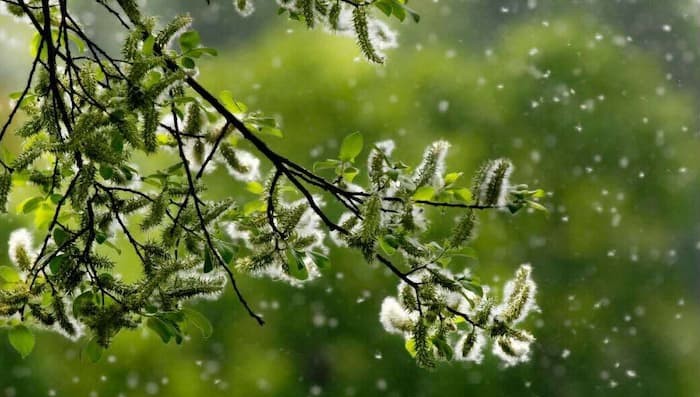
In certain conifers like the Scots pine, the pollen grains are larger and heavier, equipped with airbladders (sacs) filled with air to facilitate their transport and also to correctly orient them at the core of the female cone at the entrance of the ovule.
These abundant, anemophilous pollens contain specific chemical substances and are capable of easily penetrating human airways, causing various and sometimes very troublesome allergies, such as hay fever or forms of asthma.
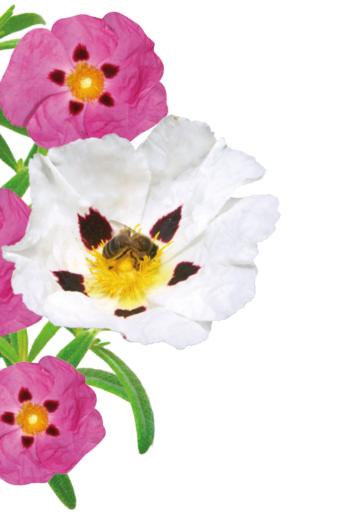
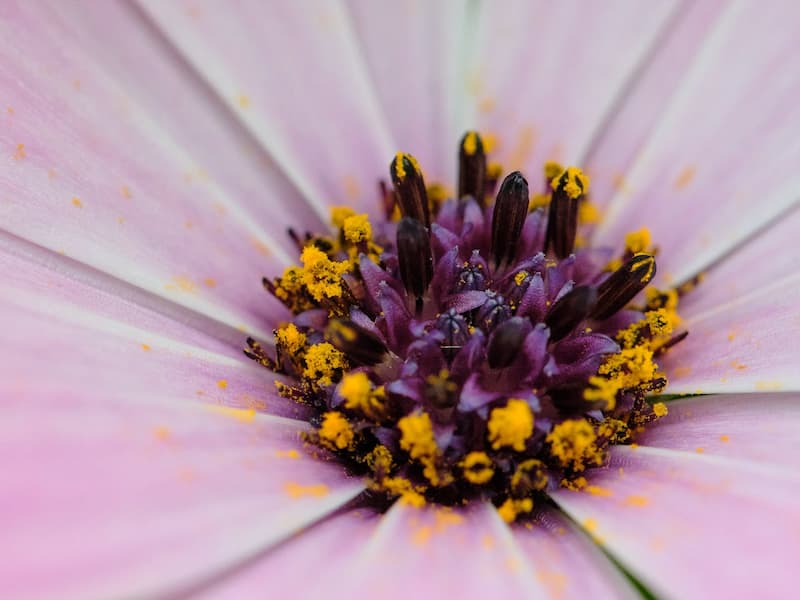
To disperse their pollen, other plant species use the services of animals: birds, bats, and even mollusks! But above all, insects (hymenopterans, dipterans, lepidopterans, coleopterans...). This is known as entomophilous pollen. Bees are the most well-known of these winged visitors who, moving from one flower to another, transport the pollen.
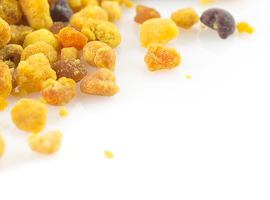
The pollen grains of entomogamous flowers are large, sticky, and cling to the hairs of insects due to their rough surfaces. Packed with energetic substances, they contain 20% protein, 25 to 50% sugars, and for the remainder, lipids, vitamins, antioxidants, fiber, and minerals.
While a large portion of the pollen is carried away by foragers to be consumed, a sufficient amount remains for this transport to benefit the plant and enable its reproduction. Unknowingly, they will deposit some of it onto the female organ of the flower: the pistil, which is composed of a stigma and an ovary. If this pollen grain is compatible, it grows a pollen tube that guides the male gametes to the ovaries. They thus transport pollen from various, genetically diverse individuals, thereby enabling genetic shuffling. The insect is "apparently" unaware that it is contributing to biodiversity by carrying it from flower to flower. It is simply feeding itself or its offspring, allowing it to keep its own species alive.
Here are a few key figures to think about
- It is estimated that bees are capable of foraging 170,000 species of flowering plants. A true global record! Nearly 40,000 species of flowering plants are said to depend exclusively on them.
- At its peak, a single bee can visit up to 3,000 flowers a day. On the scale of a hive, with just 2,000 foragers, this represents 6 million flowers visited and potentially pollinated! 80% of flowering plants thus depend on pollinators for reproduction.
Bees are thus directly responsible for the production of 70% of the fruits, vegetables, seeds, and nuts that we consume daily. Their disappearance could therefore have serious, direct, and immediate consequences on our daily lives. In the longer term, biodiversity in the broadest sense is under threat, and with it, the future of humanity.