Français
 English

Subtotal
€0.00
Checkout
Why preserve pollen in its fresh form?
A unique preservation process
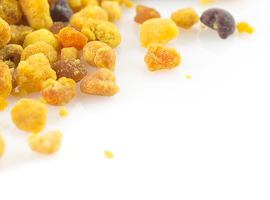
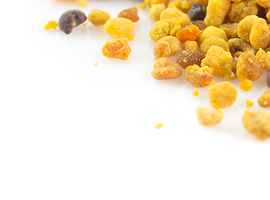
The pollen collected by bees is a highly nutritious and complex food. But be careful! It spoils very quickly when exposed to air at room temperature. That is why, for over 25 years, Pollenergie has been using a unique process that preserves all the health benefits of this natural hive food.
Fresh Pollen, a Nutritional Powerhouse
Most people only think of pollen in terms of allergies and the uncomfortable symptoms that accompany them: nasal congestion, itchy eyes, runny nose, repeated sneezing, headaches... And yet, despite their tiny size, the pollen grains produced by plants and enriched by bees are extraordinarily well-packaged containers. For humans, pollen represents a remarkable nutritional source:
- 15% to 24% plant proteins, which are levels higher than eggs and even equivalent to certain meats.
- 4% to 6% lipids, with polyunsaturated fatty acids accounting for up to 50%
- 50% to 60% carbohydrates
- 10% to 14% soluble and insoluble fibers (prebiotic action)
- a very large amount of bee-specific lactic ferments, such as lactobacilli and bifidobacterium
- highly rich in vitamins (100 g can cover up to 100% of the RDA for vitamins B9, C, and E)
- like all plants, fresh pollens are very rich in minerals and trace elements (calcium, iron, magnesium, phosphorus) and feature a highly favorable potassium/sodium ratio
- bee pollens are rich in antioxidant micronutrients (carotenoids and polyphenols), symbolized by ORAC values that can be up to 10 times higher than those of fruits and vegetables
- more than 80 enzymes have been identified in unseasoned, fresh frozen pollen
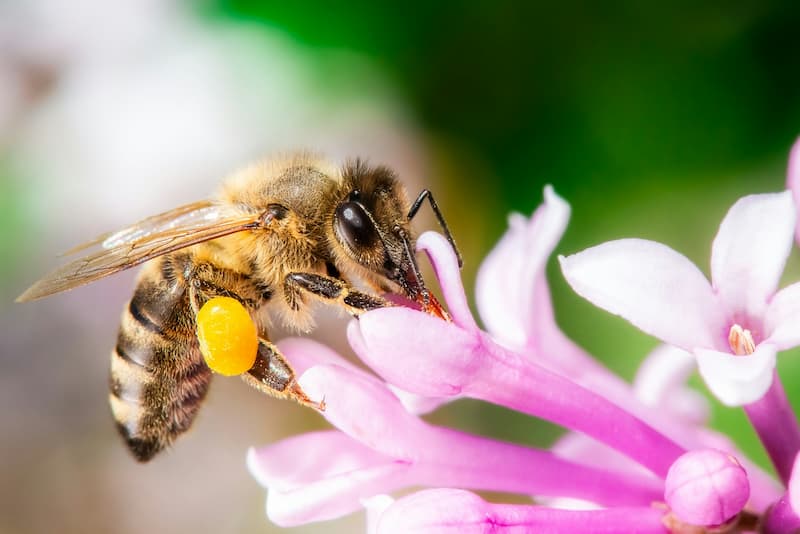
Bees harvest pollen from the stamens of flowers as they forage. They then form pollen pellets, enriching them with lactic ferments from Lactobacillus and Bifidobacterium strains, and place them in the pollen baskets located on their hind legs. Through its pollinating action, the bee ensures more than 70% of plant biodiversity.
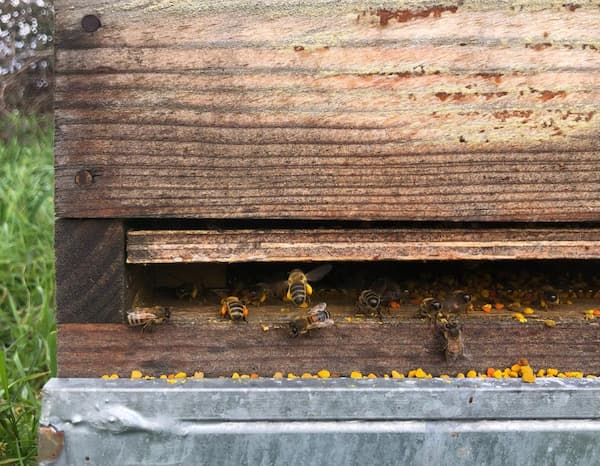
Back in the hive, the bees pass through pollen traps or grids. With each passage, they drop a few pollen pellets that fall into a collection drawer. The pollen is harvested every 2 to 3 days by the beekeeper and immediately frozen. It is then analyzed, quality-controlled, and packaged by Pollenergie at our production site in France.
Lactic Ferments in Pollen, a Treasure to Preserve
Entomophilous pollen is born from the encounter between bees and flowers. It contains a large number of nutrients that are beneficial to the body. Among these elements, we can find a large portion of vitamins C, B, and E, antioxidants (carotenoids and polyphenols), fibers, enzymes, and lactic ferments specific to the bee.
Where do these lactic ferments come from?
Lactic acid bacteria are cultivated by bees on nectar inside the hive. Before leaving to forage, they fill their honey stomach with it and then regurgitate it to moisten the pollen pellets. The ferments from the nectar will sterilize the hive, where the freshly harvested pollen will be stored at a constant temperature of 35°C, which is otherwise conducive to microbes. These specific lactic ferments are very powerful probiotics, and fresh pollen contains their benefits, which are useful for human health.
Fresh pollen that is quickly placed in the freezer is therefore much more interesting from a nutritional standpoint. This is referred to as lacto-fermented pollen, since freezing keeps the living potential of the product active. As a seasonal course, the lactic acid bacteria in fresh pollen (particularly cistus pollen) strengthen the immune system. Studies have also proven its action in the prevention of prostate hypertrophy and prostate cancer, with an increase in urinary flow.
A Unique Preservation Process
For ease of preservation, pollens are generally commercialized dried in jars. They are oven-dried at 40°C until the pellets become brittle to the bite. Beyond the loss of organoleptic characteristics, our studies have shown that the heat of the oven largely deteriorates the aromatic, vitamin, and protein components of the pollen.
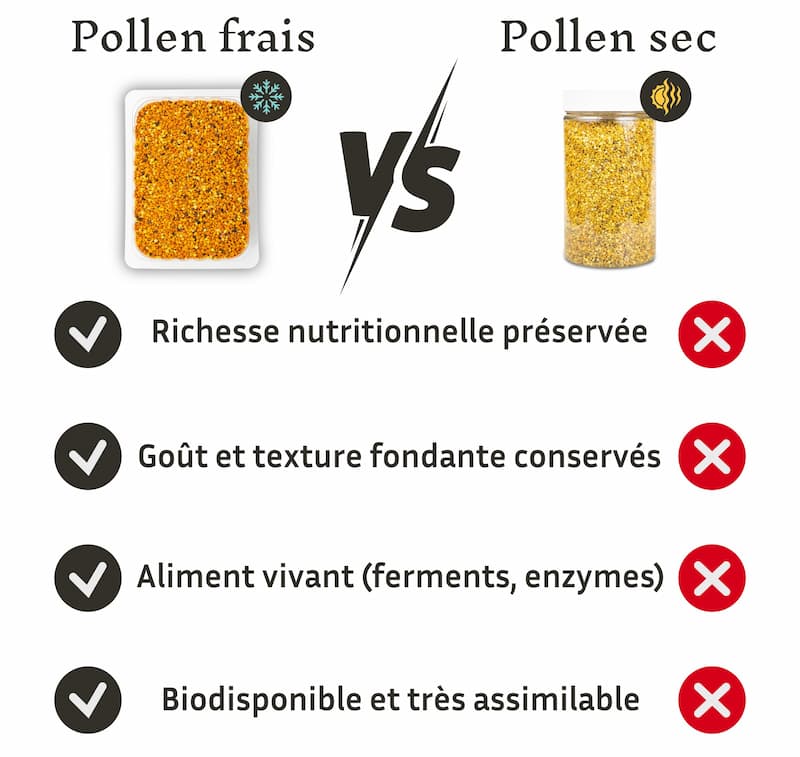
In his quest to provide consumers with a product exactly as it is found within the hive, Patrice Percie du Sert highlighted the benefits of freezing pollen and storing it at temperatures ranging from -18°C to -22°C. He noted that certain pollens, while still on the flowers, can freeze and thaw without any degradation, as they retain their germinative power (salix sp, salix nigra, taraxacum, brassica nigra, prunus...).
Different treatments were applied: on fresh, non-frozen pollen; on fresh pollen that had been frozen; and on fresh pollen refrozen after the treatments. In every case, the fresh pollen under nitrogen preserved its organoleptic properties for 1 month. We went up to 4 successive freezing and thawing cycles without any organoleptic difference being noticed compared to the control sample!
The preservation process patented by Pollenergie consists of freezing the pollen as soon as it is harvested before packaging it in an airtight, vacuum-sealed tray with the addition of nitrogen. This inert gas increases the shelf life of fresh food. Fresh pollen can thus travel for 7 days at room temperature without degrading before being placed back into freezing. Its organoleptic qualities and its full nutritional potential are thereby preserved.
Should bee pollen be thawed before consumption?
It is not necessary to thaw the pollen before enjoying it. Since it contains less than 20% water, it does not harden or form ice crystals; the cold simply stabilizes its nutrients without altering its structure.
You can therefore consume it straight out of the freezer. If you prefer, you can keep a small reserve (about 3 tablespoons) in the refrigerator in a bowl covered with a cloth. However, be sure to consume it within 4 days, as the precious lactic ferments begin to degrade beyond that time.