Français
 English

Subtotal
€0.00
Checkout
Take care of your gut to take care of your brain
The Importance of Our Gut Microbiome on Our Mental Health
The gut-brain axis orchestrates a constant dialogue between our digestive system and our emotions, making the microbiome the true guardian of our mental balance and cognitive clarity. Since this bacterial ecosystem directly influences our neurotransmitter production and stress management, nurturing it is no longer an option, but a priority. In this quest for inner serenity, fresh pollen stands out as an exceptional ally. This living treasure from the hive acts as a powerful regenerator of the gut flora, thereby strengthening the vital connection between our gut and our mind.
What Is the Link Between the Brain and the Gut?
For a long time, the link and dialogue between the brain and the gut were explored by focusing on a one-way communication axis, solely descending from the brain to the gut. However, this communication is bilateral! For instance, when subjected to stress, the brain can trigger the release of cortisol into the bloodstream. This will disrupt the gut wall's ability to contract, causing stasis (stoppage or slowing down of transit) or disruptions that, on the contrary, accelerate transit. Consequently, stressed individuals will sometimes be constipated or, conversely, experience diarrhea. Certain released hormones can also increase intestinal permeability.
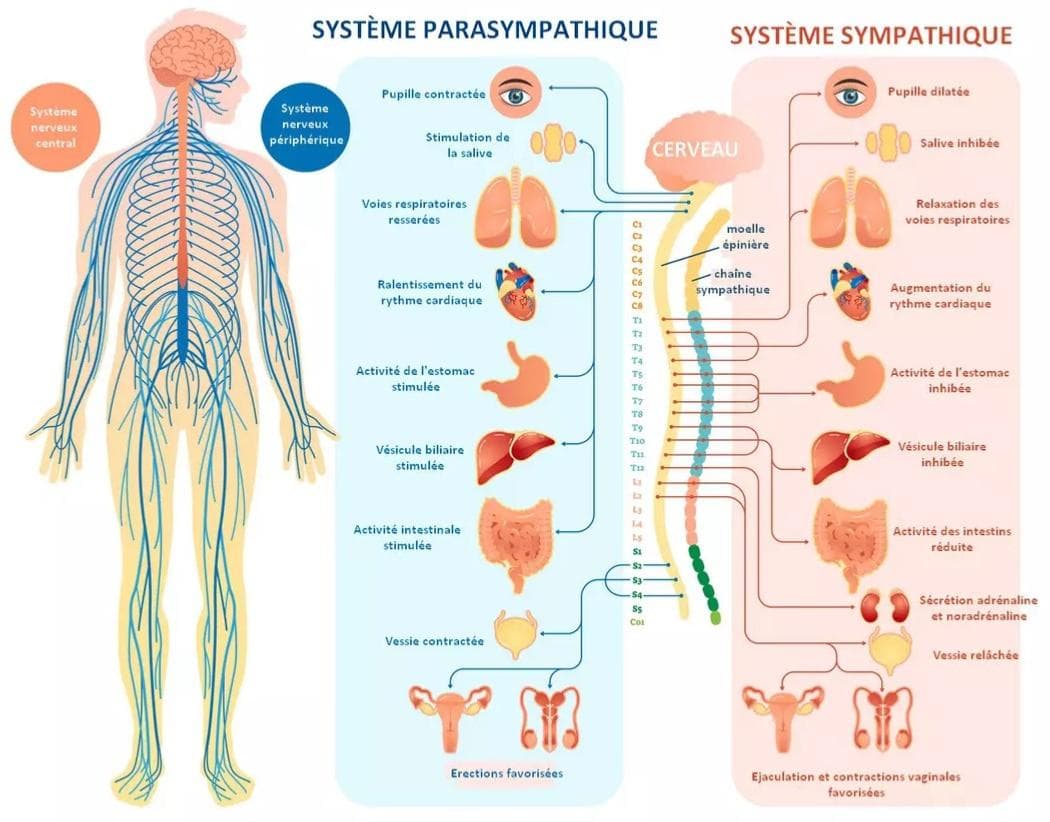
Stress will inhibit the vagus nerve or parasympathetic nerve by activating the sympathetic nerve (or orthosympathetic nerve), promoting an inflammatory state. The vagus nerve plays a major anti-inflammatory role! It is the nerve that connects the digestive tract to the brain and constantly informs it by transmitting digestive sensations, as well as information from immune cells and the microbiota.
Importance of the Vagus Nerve
The vagus nerve is the main anatomical pathway for communication from the gut to the brain. The transmitted information is processed unconsciously. Among other functions, it promotes digestion and intestinal motility. The fibers of this nerve are particularly influenced by compounds released by gut bacteria or through interactions with local cells that produce hormones and neurotransmitters such as acetylcholine. The latter helps regulate intestinal permeability and fights inflammation.
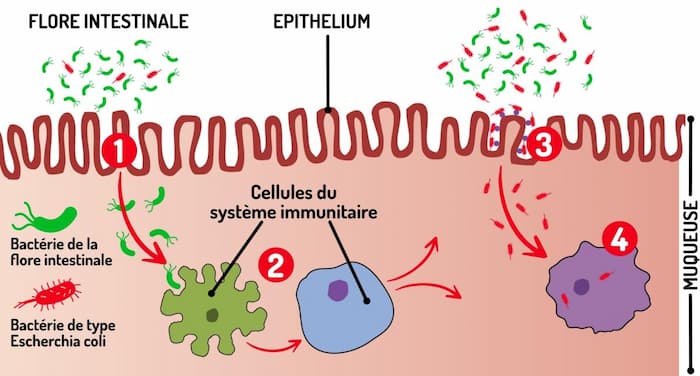
When the microbiota is disrupted, an inflammatory state is triggered, which can play a role in the deterioration of mental health. This is one of the most striking findings in psychiatric research over the last two decades. Depressed individuals show higher levels of inflammatory markers in their blood. Some forms of depression may therefore actually be masked inflammation. Psychiatrist Guillaume Fond even recommends that people suffering from depression undergo an inflammatory assessment.
- Certain bacteria from the microbiota (or gut flora) penetrate the mucosa.
- Depending on a person's genome type, an immune reaction is triggered, causing the production of inflammatory agents.
- The inflammatory response leads to an increase in binding sites for other bad bacteria on the surface of the epithelium.
- These "bad bacteria" invade the mucosa, which exacerbates the inflammation.
How Diet Affects the Brain
For example, a diet rich in dietary fiber enables the secretion of short-chain fatty acids (SCFAs) from the fermentation of these fibers. One of these acids - butyrate - is an essential fuel that provides 70% of the energy for colon cells. If it is deficient, the cells begin to devour each other and damage the intestinal barrier, promoting increased permeability that fuels inflammation.
The microbiota could also play a major role in protecting the brain by contributing to the integrity of its protective envelope, a specialized vascular barrier that limits the passage of large molecules and blood cells into the brain. Through mechanisms that are still unknown, SCFAs improve this barrier. Some individuals suffering from mental disorders have increased permeability in their blood-brain barrier.

States of intestinal dysbiosis create inflammation that alters the bidirectional communication between the brain and the gut, potentially causing an increase in anxiety and depressive disorders. Depressed individuals reportedly exhibit less rich and less diversified microbiotas. In this context, we can understand the importance of a healthy anti-inflammatory diet and its effects on psychological well-being and mental health. A Mediterranean-style diet, primarily based on plant-derived ingredients and the elimination of ultra-processed products, should be encouraged.
The more a product has been "tampered with," the more likely the body is to recognize it as an enemy and trigger an inflammatory reaction, which can spread throughout the entire body when the gut barrier is permeable. This inflammation then affects the brain just like other organs, even though the mechanisms of neuro-inflammation remain poorly understood.
Which Foods to Choose to Strengthen Your Microbiota?
The Mediterranean diet consists of prioritizing a large amount of seasonal vegetables, fresh fruits, nuts, and consuming a little meat, fatty fish, plant proteins, plenty of salads and raw vegetables to enrich your plate with prebiotics, which are wonderful fertilizers for the microbiota.

Anti-inflammatory foods are mostly of unprocessed plant origin, rich in fibers, proteins, and low in fast sugars and saturated fats. Fresh frozen pollens meet all these criteria perfectly and are excellent allies for the microbiota thanks to their richness in prebiotics and probiotics. They are living superfoods that also contribute to psychological balance.
Sources
- Bien manger pour ne plus déprimer by Dr. Guillaume Fond - Odile Jacob Publishing
- Le guide terre vivante de la santé du ventre by Dr. Martine Cotinat – Terre vivante Publishing
- À la découverte du ventre et de ses bactéries by Dr. Marcel Roberfroid – Guy Tredaniel Publishing