Français
 English

Subtotal
€0.00
Checkout
Apitherapy, a practice dating back thousands of years
The Art of Self-Care with Bee Products
Like herbal medicine, aromatherapy, and gemmotherapy, apitherapy is a form of alternative medicine that takes a holistic approach to human health. It relies on the properties of bee products (pollen, propolis, honey, royal jelly, etc.) to restore balance—"homeostasis"—to prevent dysfunction, and to better withstand the stresses of daily life. While apitherapy is by no means a substitute for conventional medicine, it proves to be a highly complementary approach!
The oldest depiction of Human-Bee relationships dates back to the Neolithic period: it features a cave painting dating from 7000 BC, found on the walls of a cave in Valencia, showing a human figure harvesting honey using a basket.

Use of Honey Throughout History
From Antiquity until the arrival of cane and, above all, beet sugars, honey was widely consumed for its sweetening power. It was also very extensively used for its therapeutic properties. Today, it is still used in food, but much less as a popular natural remedy.
All the peoples of Antiquity knew and appreciated honey, considering it a gift from the Gods. In Egypt, beekeeping is believed to have started around 2400 BC. It was widely used as a sweetener, as an offering to the gods, and as an ingredient for embalming. Honey was also part of the composition of medicines. These preparations came in the form of pills, ointments, decoctions, plasters, and eye drops. Out of 900 different remedies, more than 500 contained honey in their composition!
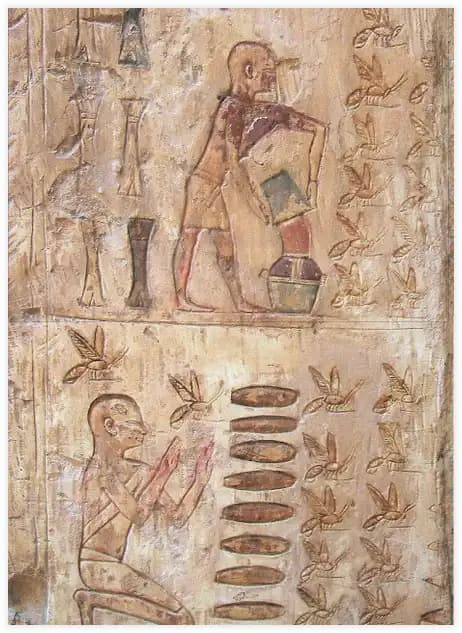
In Ancient Greece, honey was used to honor the Gods, as well as heroes and victors. Athletes never entered a stadium without having previously consumed honey. Hippocrates (circa 460 BC - 370 BC), a Greek physician and philosopher, largely contributed to advocating the use of honey in diet and for medicinal purposes (wound healing, colic, dysentery, ulcers…). Dioscorides, a Greek physician and botanist born in 40 AD, also strongly recommended its use for therapeutic ends (healing of wounds, earaches…).
Christianity led to an increase in the production of honey and wax, the latter being used for making candles. Furthermore, the Quran does not fail to praise the virtues of honey. From the Middle Ages to the Renaissance, its use remained highly prized for cooking, but also for health applications. Apothecaries drew on recipes from Antiquity to develop cerates (an ointment made of wax and oil), mellites (a liquid and syrupy medicine with a high honey content), electuaries (a soft pharmaceutical preparation made of honey and powders), and theriacs (an electuary against poisons and venoms).
Honey held its ground from the 17th to the 18th century despite the arrival of cane sugar on the European market. It was also found in medicinal drinks: oxymels. Oxymel is certainly the oldest natural remedy coming to us from Ancient Greece. It is a sweet and sour syrup made from apple cider vinegar and honey, with expectorant and diuretic properties. It possesses numerous properties depending on the plants used to flavor it. From the 19th century onward, the importance of honey and its medicinal use diminished considerably following the introduction of beet sugar to the market.
Apart from its nutritional uses, honey is currently used primarily for:
- its emollient and soothing properties in antitussive (cough) preparations.
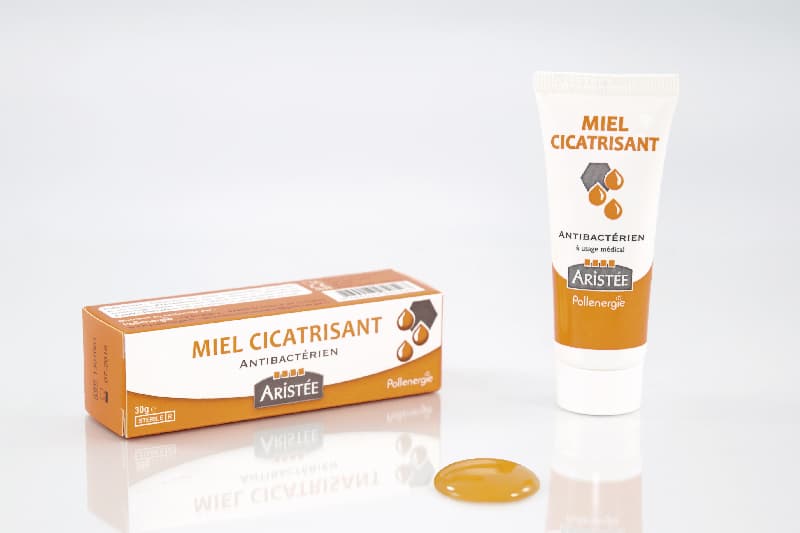
- its beneficial action in the healing of wounds, cracks, burns, and chapped skin. Professor Descottes from the Limoges University Hospital (CHU) demonstrated this on thousands of patients following operations for wound repair and on bedsores.
History of Propolis
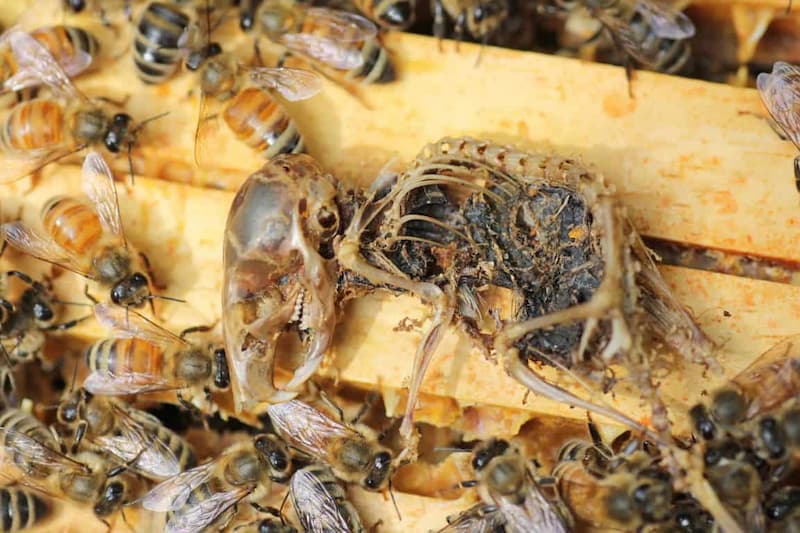
Egyptology has demonstrated that propolis was used during the embalming of mummies. By observing the meticulous work of bees, the Egyptians discovered the bactericidal, antifungal, and antiviral qualities of propolis, which they then adopted for their own use. Indeed, in the hive, to prevent any putrefaction when they are too big to be removed, bees mummify their dead enemies, such as mice. This prevents any spread of germs that could harm the health of the colony.
We owe the first scientific observations about bees and their products to the book by the philosopher and naturalist Aristotle (384-322 BC), who already knew that bees gathered propolis from the "tears of trees." The illustrious scholar appreciated this product for its therapeutic properties and recommended it for bruises and purulent wounds.
The ancient Greeks gave the product its current name, with propolis meaning "before the city." Also known to the Romans, it was mentioned by the poet Virgil a century before our era. Medical writings from 12th-century Georgia evoke propolis and other beekeeping products as remedies for inflammation of the oral cavity and tooth decay. In these regions, propolis remains used today in the empirical medicine of rural populations.
Closer to our time, during their conquests, the Spanish noticed that the Incas (a 13th-century AD civilization) knew about and used propolis against infections accompanied by fevers. In France, Ambroise Paré (1510-1590), a French surgeon and anatomist, was the first to mention propolis in his writings in the 16th century. We can also note traces of its use in the treatment of wounds during the 18th and 19th centuries.
Rich in polyphenols, propolis was incorporated into olive oil to create an ointment used from the late 19th century onwards to treat hemorrhoids and ulcers. The healing properties of propolis were frequently utilized by military doctors on battlefields, notably during the Napoleonic wars (and the Boer War) and on the Eastern Front during the First World War.
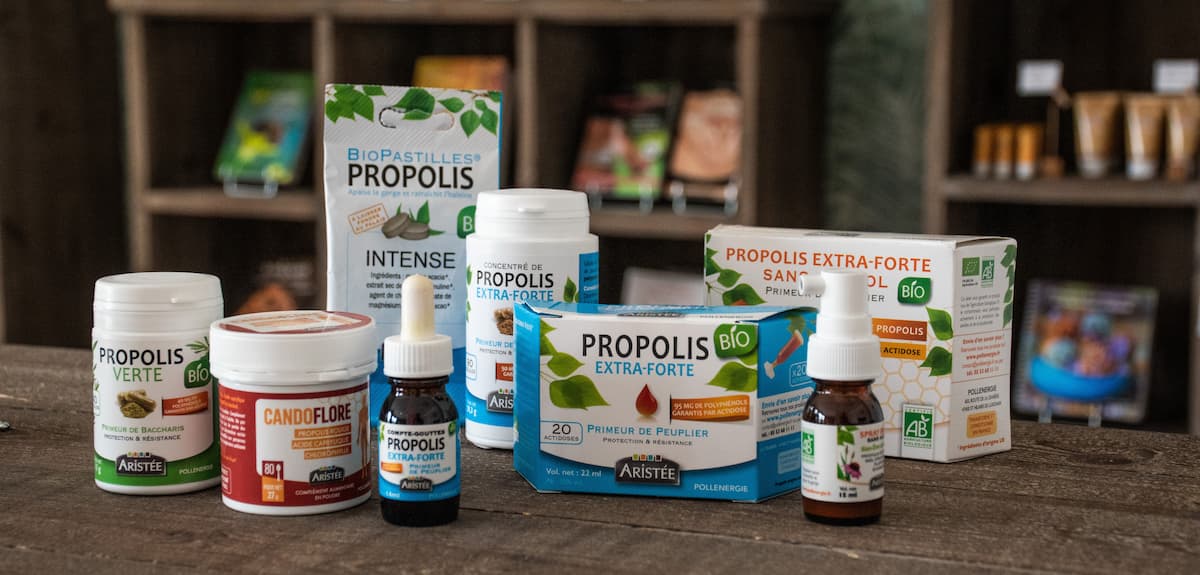
Once a somewhat confidential product not so long ago, propolis has experienced an unprecedented boom in recent years. To the point that it can now be found in almost every pharmacy and in increasingly extensive and sophisticated product ranges: lozenges, oralor nasal sprays, mouthwashes, toothpaste, shampoo, creams, in powder, chewable, liquid, or oily forms… Today, propolis comes in all shapes and sizes for ever more varied uses.
Pollen and Royal Jelly, a More Recent Story
It was around 1950 that these two beehive products were first promoted in dietetics and human therapeutics. Along with honey, the pollen stored by bees in the hive constitutes their main diet, except for the queen, who feeds exclusively on royal jelly secreted by the bees' salivary glands. Bee pollen has undeniable effects on intestinal regulation and general fitness, both in the young and in the elderly to delay the disorders of senescence. You will find the virtues of this living superfood widely described and elaborated upon on our website.
The work of Rémy Chauvin, a French scientist, contributed to the boom of pollen. Later, starting in 1995, the research conducted by Patrice Percie du Sert within Pollenergie—and transcribed in his book "Ces Pollens qui nous soignent"—allowed fresh frozen pollen to gain widespread recognition among the general public. Royal jelly is recognized for its beneficial effects on the neuropsychic system. It acts as a general stimulant and is particularly recommended against asthenia, depression, and fatigue.
Sources
History and Uses of Honey, Mead and Hive Products by Claude Viel, Jean-Christophe Doré
The Rustica Guide to Beekeeping – Rustica Editions